
Last updated November 15, 2026
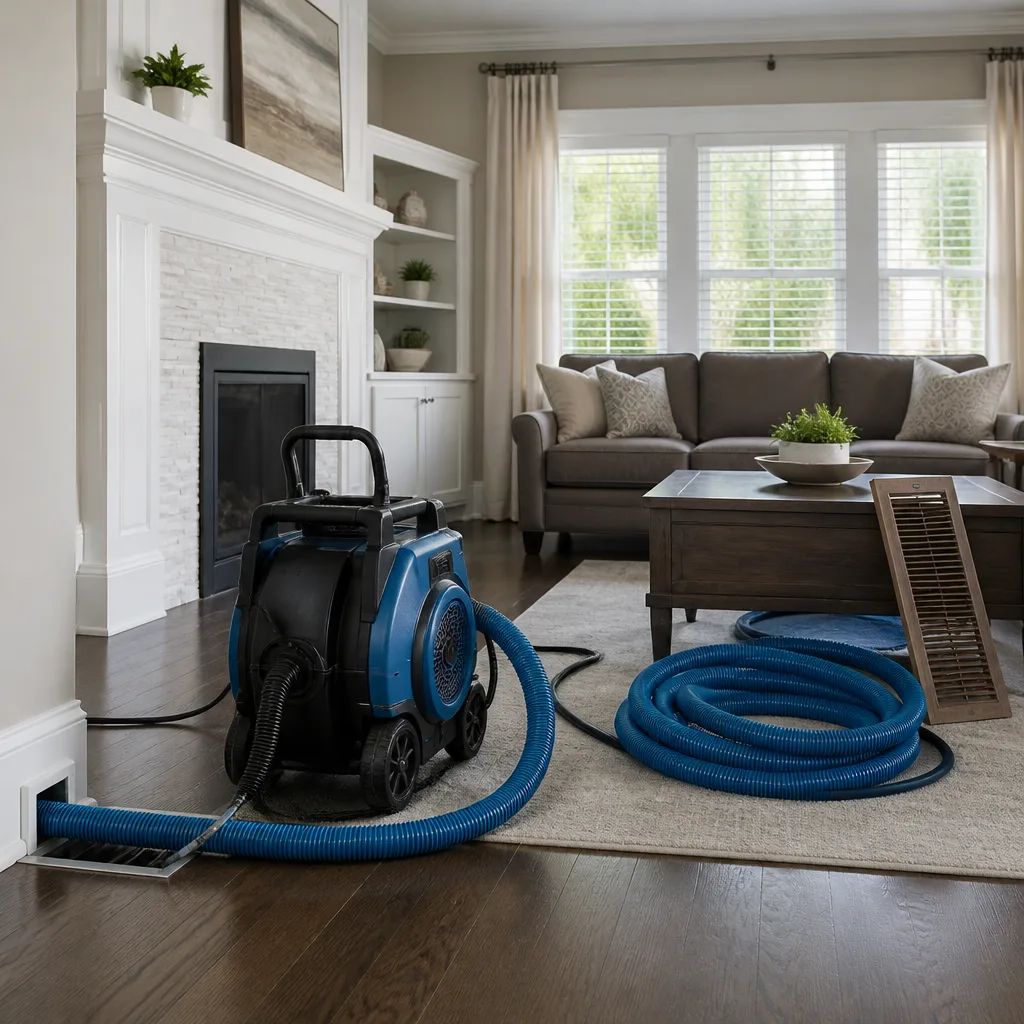 Whole-home duct cleaning
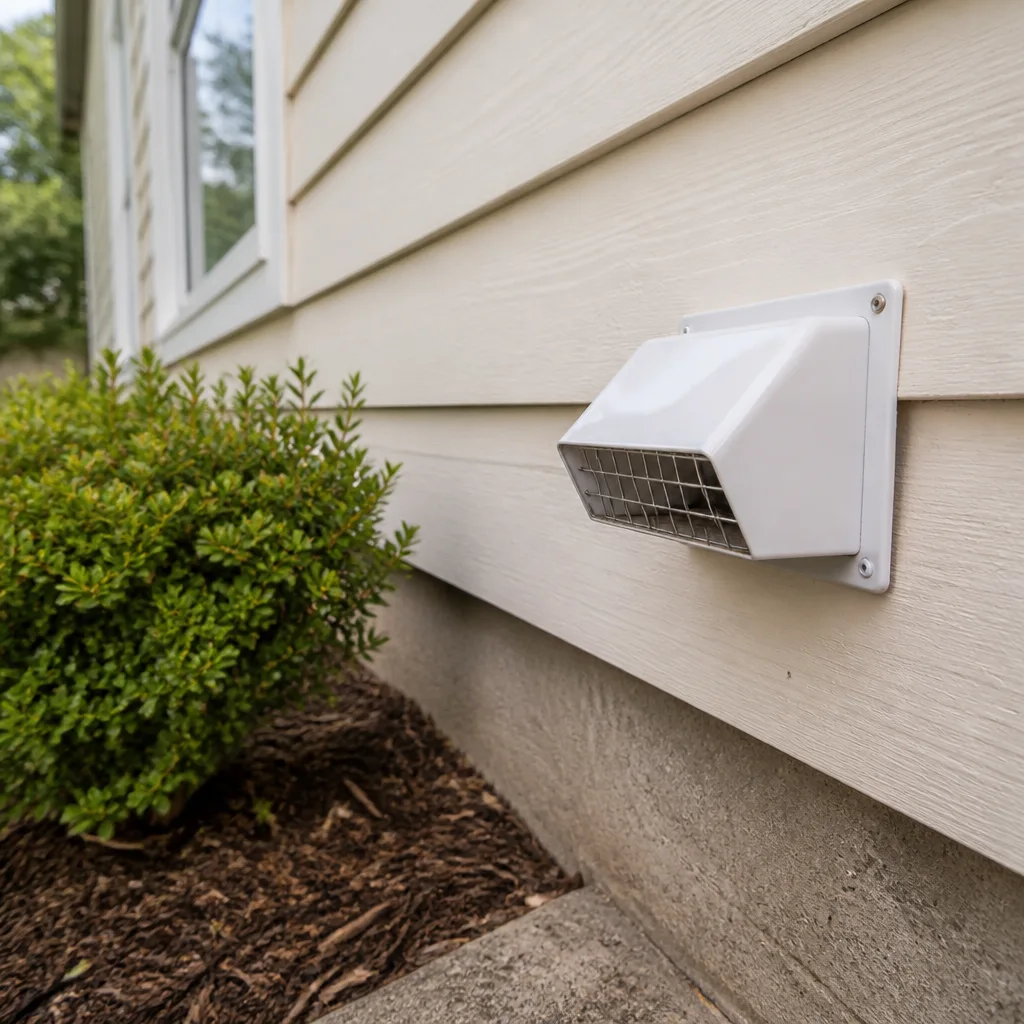 Dryer vent cleaning
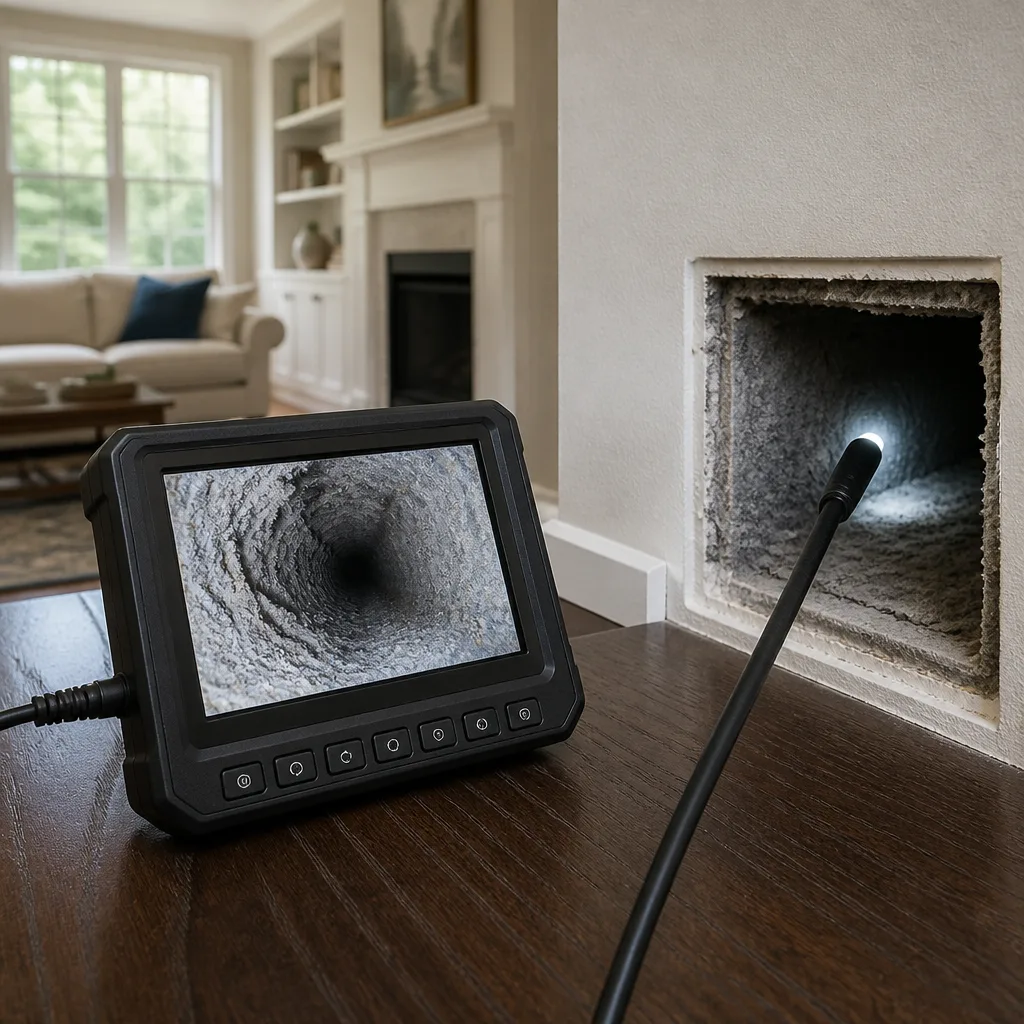 Camera inspection
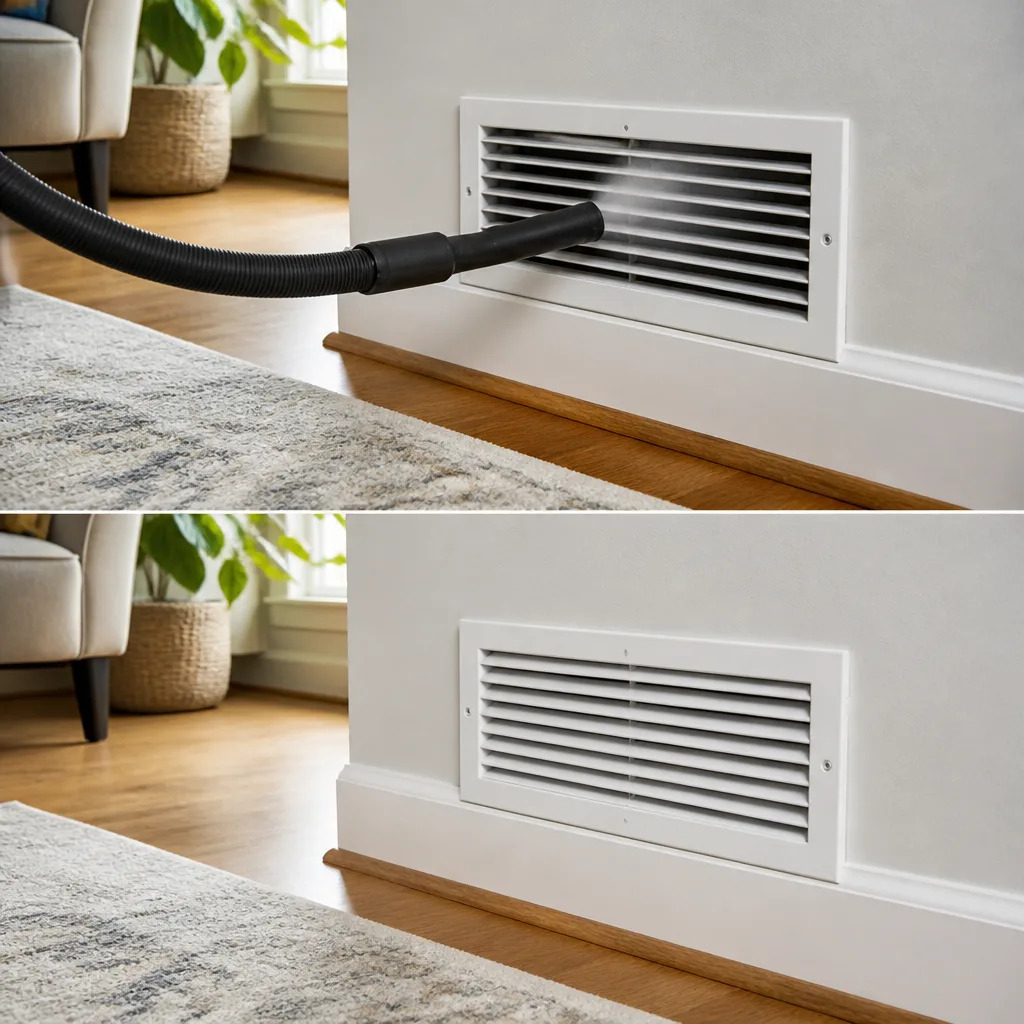 Sanitizing & deodorizing
Whole-system duct and dryer vent check with before-and-after photos - you see exactly what came out of your vents
That "$99 whole-house special" is a bait ad - the real number appears once they are in your hallway, or the "clean" is a shop-vac at the register. We photograph the inside of your ducts before and after instead.
DIY vs Professional Air Duct Cleaning: The Thornton Homeowner’s Decision Guide
Here’s the part most duct cleaning articles skip: a $40 dryer vent brush and a shop-vac will clean your visible registers and the first 18 inches of duct behind them. The other 150 linear feet of ductwork in the average Thornton home stays exactly as it was. That’s not a knock on homeowners who want to handle things themselves. It’s a measurement problem, and once you understand where consumer tools stop working and why, the decision gets a lot clearer. This guide breaks down the mechanical limits of DIY equipment, the tasks you can genuinely do on your own, and the specific Thornton home profiles where a professional cleaning pays for itself.
Quick Answer
DIY duct cleaning works fine for surface tasks like washing registers, clearing lint from a dryer vent, and swapping return filters. It cannot remove the settled debris, dust, and construction residue that collects beyond the first reachable length of duct, because consumer vacuums lack the suction, agitation, and containment to get it out without blowing it into your living space. For homes with pets, recent renovations, or older flex duct, a professional cleaning with rotary-brush and HEPA negative-air equipment is the only method that reaches the full system.
Styles & brands we work with
- Whole-home duct cleaning
- Dryer vent cleaning
- Camera inspection
- Sanitizing & deodorizing
Table of Contents
- What Consumer Tools Physically Cannot Do
- What You Can Legitimately DIY Between Cleanings
- When a DIY Attempt Makes Professional Cleaning Harder
- The Thornton Home Profiles Where Professional Service Has Clear ROI
- What Professional Equipment Accomplishes That No Shop-Vac Replicates
- DIY vs Professional: An Honest Cost and Effort Comparison
- How to Judge a Professional Duct Cleaning Crew
What Consumer Tools Physically Cannot Do
A shop-vac is a low-static-pressure machine built to pull debris a few feet up a hose. Ductwork is a long, low-pressure path with turns, drops, and offsets. Those two facts don’t get along. A typical wet/dry vacuum generates enough suction to lift loose dust at the register, but by the time that airflow moves ten or fifteen feet down a flex run, the static pressure has collapsed and the debris never makes it back to the tank.
Consumer duct brushes have the same fundamental problem from a different angle. A hand-cranked or drill-attached brush spins at low RPM and relies on the operator to push it forward through a flexible line. That works for the first length. It does not work for a main trunk line running under a slab or through a wall cavity, and it cannot be steered around a 90-degree elbow without kinking the brush shaft or the duct itself.
Then there’s agitation. Settled dust bonds to the duct wall through light static and moisture cycling. Loose vacuuming pulls the top layer and leaves the rest. Removing bonded dust requires mechanical contact at speed, and no consumer brush turns fast enough to break that bond without the operator forcing it, which is when flex duct gets torn.
Here’s the mechanical gap in plain terms:
- Reach: consumer brushes and shop-vac hoses handle the register and roughly the first 18 inches of branch duct. Most Thornton homes carry between 130 and 180 linear feet of ductwork depending on layout and number of returns.
- Suction capacity: shop-vacs move air volume, not the sustained static pressure needed to pull debris through a long run of small-diameter flex.
- Agitation method: hand brushes spin slowly and can’t pass elbows. Rotary brush systems turn at hundreds of RPM and articulate around turns.
- Containment: consumer vacuums have basic filters, not HEPA-rated containment, so loosened debris escapes into the room air as fine dust.
None of this is dangerous. It’s just the ceiling of what a plug-in tool from a hardware store can physically do to a duct system. And that ceiling is what makes the air duct cleaning decision worth thinking through rather than guessing at.
What You Can Legitimately DIY Between Cleanings
Plenty of the maintenance that keeps a duct system healthy is genuinely a homeowner task. Doing these things consistently stretches the time between professional cleanings and makes each one more effective. Doing them wrong is where homeowners get into trouble, so it’s worth spelling out what’s actually reasonable.
Washing the register covers and return grilles is straightforward. Pop them off, soak them in warm water with a mild degreaser, scrub the slats with a soft brush, dry fully, and replace. Registers collect visible dust fast, especially in homes near newer construction where drywall dust is still settling, and washing them removes a lot of surface load without touching the duct interior.
Keeping the return filter housing clean and the filter fresh matters more than most homeowners realize. A clogged return filter is one of the most common reasons a system’s ductwork gets loaded with dust in the first place, because the filter stops doing its job and the return line becomes the filter. Check it against the manufacturer’s replacement interval, replace it on schedule, and wipe out the housing when you swap it.
Dryer vent maintenance deserves its own line. Dryer vents are a fire risk, not a footnote, and clearing the flexible run behind the dryer, checking the exterior termination flap, and removing lint buildup on the interior screen are tasks almost every homeowner can and should handle. Removing the lint from the visible run reduces the fire load significantly. But when the vent run is long, has multiple 90-degree bends, or exits through a roof, the reach problem returns and the interior of that run stays beyond what a homeowner can clear safely.
Vacuuming around the registers and return grilles with a HEPA household vacuum reduces what’s available to be drawn into the system. It’s a small thing, but it pays off between cleanings.
What honestly isn’t a homeowner task: pulling duct sections apart to reach the interior, feeding a camera through a main trunk to check for buildup, or attempting to clear a frozen or blocked flex run. Any of those can turn a routine cleaning into a repair job.
When a DIY Attempt Makes Professional Cleaning Harder
We’ve seen this enough times to say it plainly: a failed DIY attempt isn’t just wasted effort. It can convert a standard cleaning into a repair scenario. Three things tend to go wrong.
- Compressed debris. When a homeowner feeds a hand brush into a flex run and pushes hard to make progress, the debris doesn’t come out. It packs down against the duct wall or into the next elbow. Compressed debris is significantly harder for any cleaning system to dislodge later, and in some cases it creates a partial blockage that changes airflow through that branch.
- Dislodged insulation. Internal duct lining and external insulation wrap both fail when a stiff brush is forced against them. The result is loose insulation sitting in the duct, which then gets carried into the airstream or into your supply registers. That’s a worse outcome than the dust you started with.
- Damaged flex duct. Flex duct is a spiral wire wrapped in plastic and insulation. It tears at the seams easily when a brush shaft kinks against an elbow or when a homeowner pulls a run apart to reach inside. A torn flex run leaks air into a wall cavity, and that has to be repaired before any cleaning counts for much.
This is the case for treating the interior of ductwork differently from the register surface. A dryer vent brush is cheap and appropriate for its purpose. Sending it into a branch duct run and forcing it around a bend is when the tool exceeds what it was designed for. If a homeowner finds themselves at that point, the honest move is to stop and call a crew that can do it without damage.
The reason we offer air duct cleaning together with air duct repair as a single call is exactly this scenario. If a cleaning uncovers a torn or collapsed run, we can fix it in the same visit rather than leaving you to find a second contractor.
The Thornton Home Profiles Where Professional Service Has Clear ROI
Not every home in Thornton benefits equally from a professional cleaning. Some duct systems are lightly used, well-filtered, and in new-enough condition that a homeowner-maintained schedule is genuinely sufficient. Others are a different story, and it’s worth being specific about which ones.
Homes with pets, especially multiple or long-haired pets. Pet dander is finer and more adhesive than ordinary household dust. It clings to duct walls, gets re-entrained every time the system runs, and creates a load that a homeowner schedule never really clears. Homes with pets are the clearest case where the professional cleaning delivers a result the homeowner can feel in the air.
Homes that recently went through a renovation. Drywall dust, sawdust, and construction debris settle into ductwork fast, and much of it migrates beyond the reachable length during the project when the HVAC is running. A post-renovation cleaning is really a debris removal job, not a maintenance job, and it needs the containment discipline of negative-air equipment so that the dust doesn’t just get pushed into the living space.
Older flex duct systems. Flex duct is common in Thornton housing stock from the last few decades. It works well, but it also sags over time, collects debris at low points, and doesn’t tolerate aggressive brushing. Systems in this condition benefit from a rotary brush approach that’s built for flex rather than a stiff shop-vac brush forced through it.
New purchases with unknown HVAC history. When a buyer takes possession of a home and has no record of when the ducts were last cleaned, a professional inspection is the responsible first move. It sets a baseline and it tells you what you’re inheriting.
Homeowners dealing with allergy symptoms that get worse when the system runs. This one deserves care, because dust in ducts is only one possible cause. But when the timing correlates to HVAC cycles, a cleaning is a reasonable thing to rule out.
If any of those profiles sound like your home, the honest math usually comes out in favor of professional service. If none do, the DIY maintenance path is a reasonable one for now. We’ve had customers call because the profile matched and they wanted the answer specifically for their home, and that’s what a free estimate is for.
What Professional Equipment Accomplishes That No Shop-Vac Replicates
The mechanical difference between a consumer attempt and a professional cleaning comes down to four things: reach, agitation, suction, and containment. Each of the four needs to be solved simultaneously. Solving three of the four only gets you a messier version of the same problem.
Rotobrush rotary-brush systems solve reach and agitation together. The brush head spins at speed, articulates through elbows, and feeds forward on a flexible whip that handles the length of a full branch run. Because it’s making mechanical contact with the duct wall at speed, it breaks bonded dust loose rather than just pulling the loose layer. Rotobrush is the same equipment standard used by commercial duct contractors, and it’s built for residential flex duct specifically. That last point matters because the wrong professional tool on flex duct can also cause damage.
Nikro HEPA-rated vacuum systems solve suction and containment together. These are high-static-pressure machines that pull debris through the full length of the duct run without losing suction, and they filter what they capture through HEPA-rated media rather than recirculating fine dust into the room. The difference from a shop-vac isn’t a matter of degree. It’s a different class of machine.
Abatement Technologies negative-air and HEPA-filtration equipment solves the containment problem at the room scale. It’s the same discipline used on remediation jobs, brought into a standard residential cleaning. Setting up negative pressure at the work zone means loosened debris is actively pulled into filtration rather than released into the living space. In our experience, this is the single biggest difference a homeowner notices between a properly equipped cleaning and a cheap one: no dust cloud settling onto furniture after the crew leaves.
Together, those three equipment families cover the mechanical ground that no consumer tool can. And that’s before the repair capability comes in. If the cleaning uncovers damaged flex, disconnected joints, or a collapsed run, that’s a fix we can make on the same visit rather than handing it off.
Owners of whole-home air-quality systems should also know this: we work with Honeywell and Aprilaire systems routinely, so a cleaning doesn’t conflict with an existing premium air-quality component. Your Honeywell or Aprilaire setup deserves a compatible crew that knows how to work around it.
DIY vs Professional: An Honest Cost and Effort Comparison
Any honest comparison has to start with what a homeowner is actually paying for in each scenario. The DIY path costs less up front but delivers a specific, limited result. The professional path costs more but solves the entire system. Here’s the trade in plain terms:
- DIY equipment cost: A shop-vac, a hand brush, and a dryer vent brush typically run $80 to $200 one time, and last for repeated use.
- DIY time per round: Two to four hours for registers, filters, dryer vent, and surface vacuuming, depending on the number of returns and how thorough the homeowner is.
- DIY coverage: The visible register surfaces and roughly the first 18 inches of each branch duct.
- Professional cleaning: Full system coverage including main trunk lines and every branch, with rotary agitation, HEPA-rated capture, and negative-air containment. Pricing is per system, based on the number of vents, trunk length, and system condition, and set by the written estimate before work begins. That’s one flat price per system agreed before work starts, not a per-vent price sheet.
- Professional cleaning time: Most single-system residential cleanings land in the two-to-four-hour range once the equipment is set up and containment is established.
The case for DIY is real when the system is lightly used, well-filtered, and the homeowner is disciplined about maintenance. The case for professional service is real when the system has actual load in it that DIY can’t touch. The mistake to avoid is doing the DIY work and then believing the system is clean because the visible surface looks clean. That’s the gap the cheap-quote operators exploit, and it’s not a fair comparison on either side.
The other cost most homeowners don’t factor in is the cost of a failed DIY attempt. A damaged flex run that has to be repaired, or a compressed debris pack that takes longer to dislodge, flips the math in a hurry.
How to Judge a Professional Duct Cleaning Crew
If the guide has done its job and you’re leaning toward professional service, the next question is which crew to call. This industry has a reputation problem built on bait-and-switch pricing, and the way to sidestep it is to ask specific questions before you book.
- Ask what equipment they run. A serious crew will name Rotobrush or Nikro or equivalent. If the answer is “professional vacuums” with no names, ask for specifics.
- Ask about containment. A proper answer includes HEPA filtration and negative-air setup. An answer that just says “we use a big vacuum” is not the same.
- Ask for the price in writing before work starts. One flat price per system, agreed up front. A per-vent price sheet is a red flag, and a teaser coupon price is the setup for an invoice that grows once the technician is on site.
- Ask what happens if they find damaged duct. A crew that can repair what they find is a different engagement than a crew that will hand it off. That’s why we offer cleaning, dryer vent service, and dryer vent cleaning and duct repair under one call.
- Ask for before-and-after photos of your own ducts. This is the single most useful proof-of-work request. It takes the “did the work actually happen” question off the table.
- Ask whether they work with your air-quality accessories. If you own a Honeywell or Aprilaire system, ask how they handle it.
None of those questions are unusual or hard for a properly equipped crew to answer. The crews that hedge on them are telling you something.
Common Mistakes to Avoid
- Believing a clean-looking register means a clean duct system. The register surface is the easiest thing for a homeowner to clean and the least informative about what’s happening in the branch and trunk lines behind it.
- Forcing a hand brush into a flex run past its bend. Flex duct tears at the seams when the brush shaft kinks against an elbow, and the resulting leak into a wall cavity has to be repaired before the cleaning counts.
- Skipping the dryer vent because the duct cleaning feels more important. Dryer vents are a fire risk, not a footnote, and lint buildup in the run is a genuine hazard no matter how well the rest of the house is maintained.
- Hiring based on a coupon price without asking what’s included. In Thornton and across the Front Range, the coupon-to-invoice gap is the industry’s most reliable complaint. Ask for a flat price per system in writing.
- Running the HVAC system during or right after a renovation without a filter upgrade. Drywall dust gets pulled into the return and distributed into the duct system during the project. If the cleaning is going to happen, it makes sense to do it after the project rather than before.
- Assuming a HEPA household vacuum and a shop-vac are the same thing. They aren’t. A HEPA household vacuum captures fine dust for air quality; a shop-vac captures volume. Neither delivers professional-grade duct agitation or negative-air containment.
- Over-cleaning a well-maintained system. If the ducts were properly cleaned recently and the filter discipline is solid, an annual cleaning is likely more than the system needs. Frequency should follow load, not a schedule pushed by a sales pitch.
See the difference
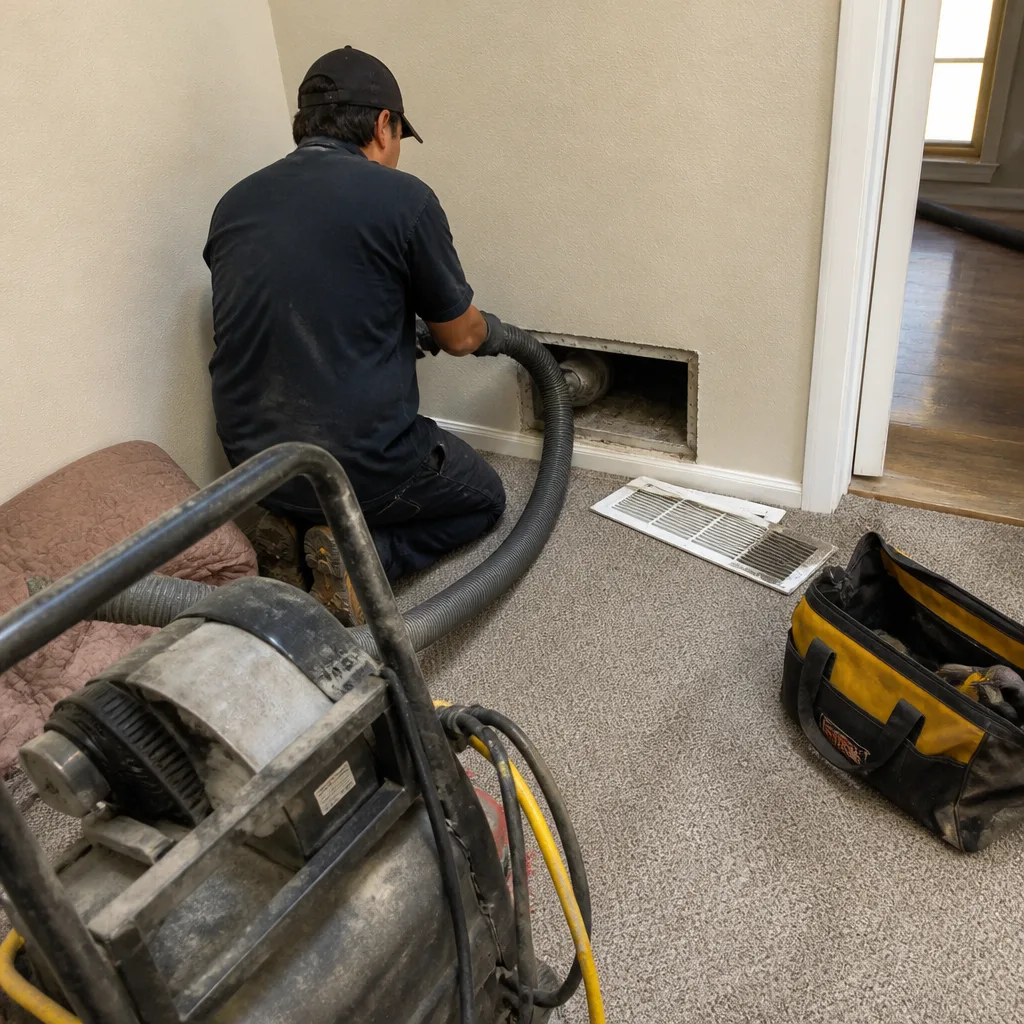 Before
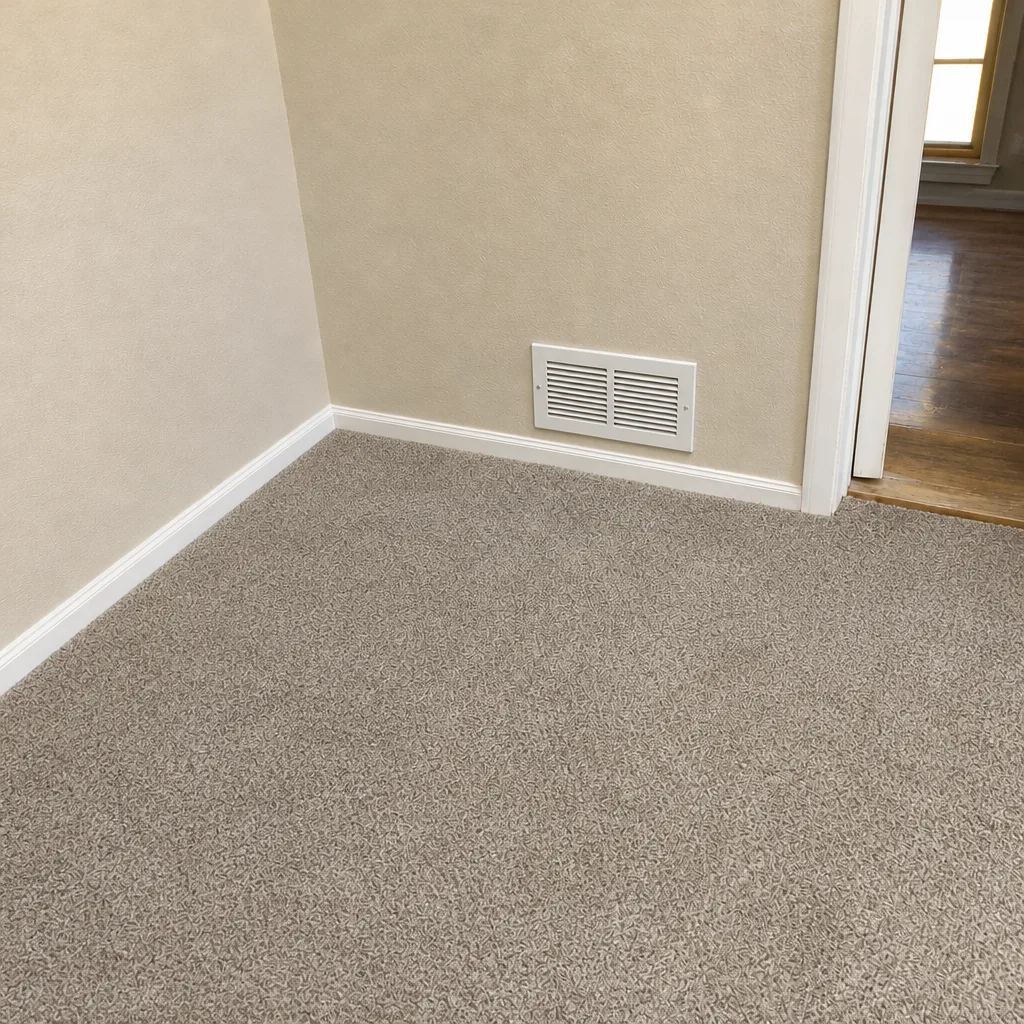 After
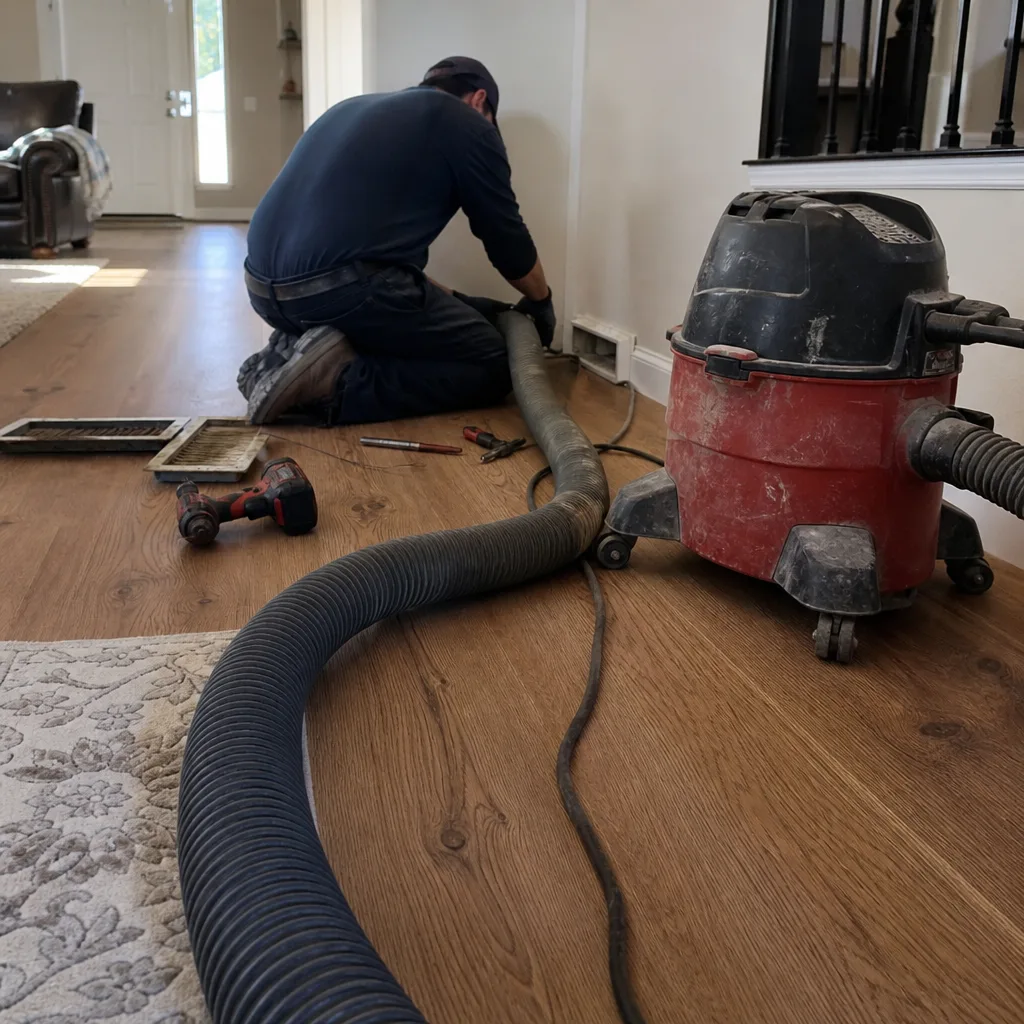 Before
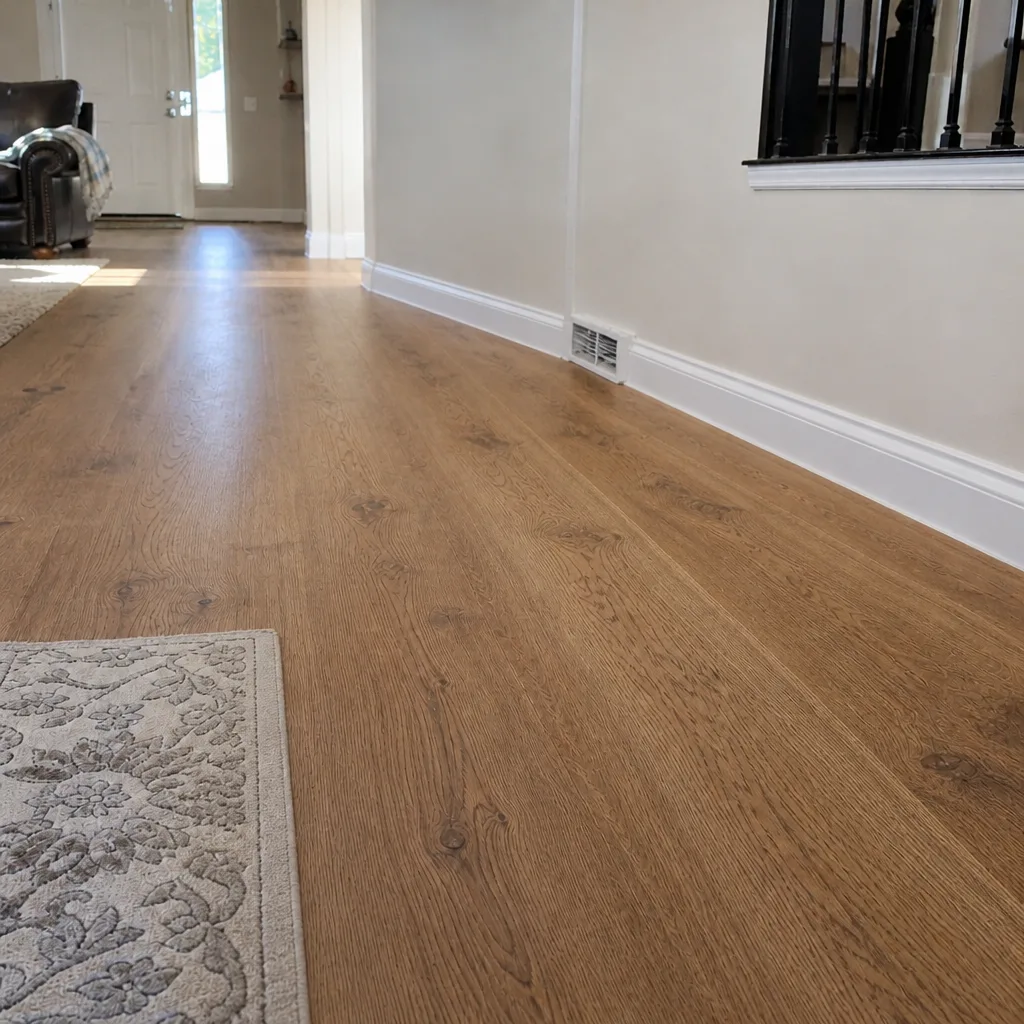 After
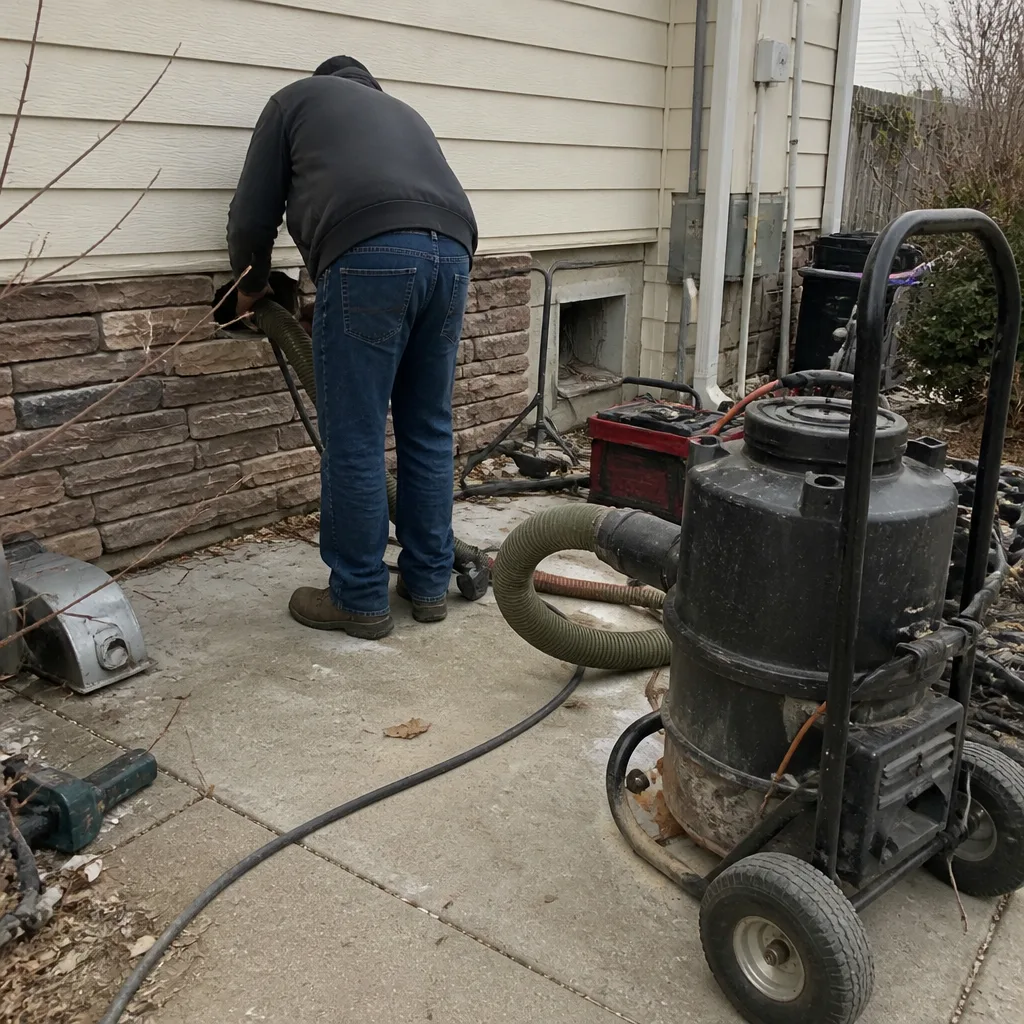 Before
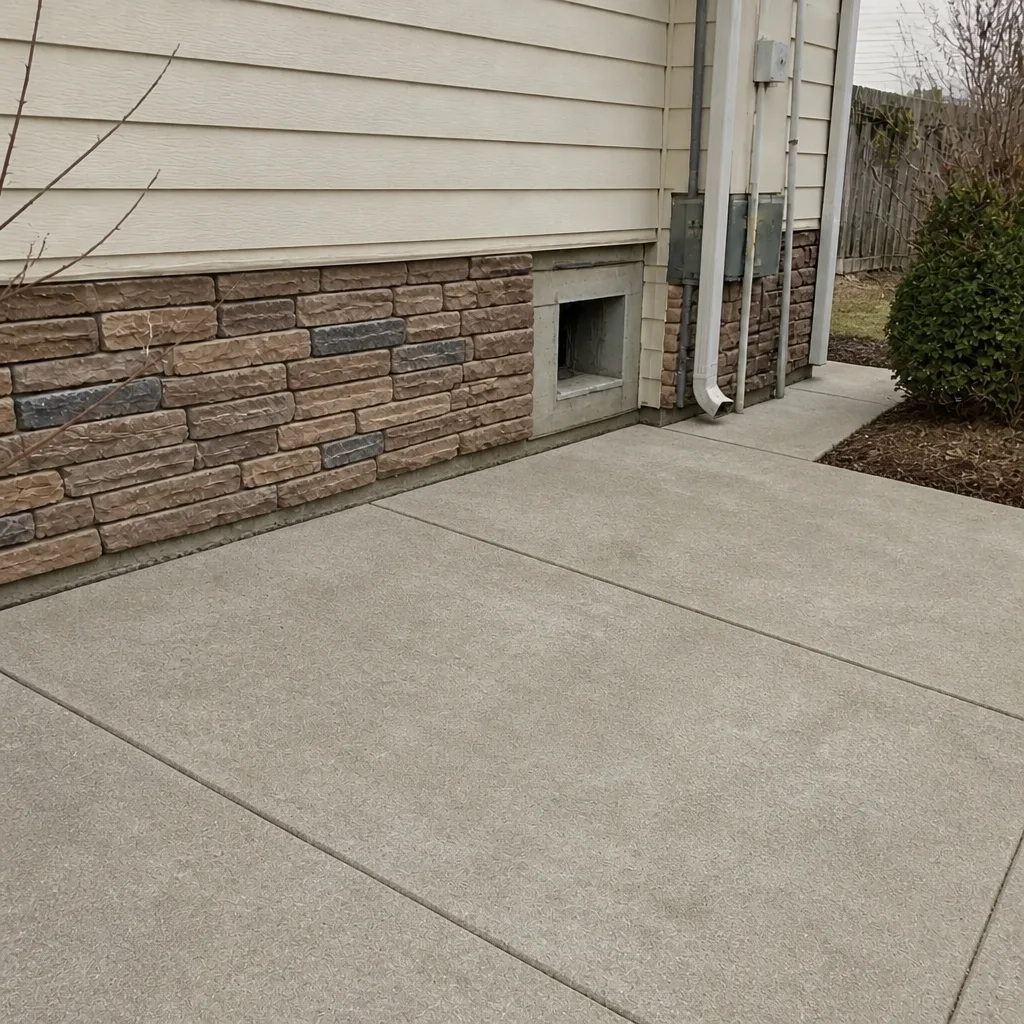 After
When to Call a Professional
If your home fits one of the profiles above, saving the phone number matters more than reading more of this guide. Pet-loaded homes, post-renovation homes, homes with older flex duct, recent purchases with unknown HVAC history, and homes where the system runs constantly all land in the same place: the professional cleaning delivers a result DIY cannot. The same is true if a DIY attempt has already gone sideways, or if you’re a Honeywell or Aprilaire owner who wants a crew that knows the system. Call (888) 495-2236 for a free estimate. We answer 24/7 with fast dispatch from 7am to 7pm, Sunday through Friday. Duct Cleaning Thornton offers free estimates throughout Thornton, and we handle duct cleaning in Thornton alongside dryer vent service and duct repair in one visit.
Frequently Asked Questions
You can clean the register covers and roughly the first 18 inches of each branch duct with a shop-vac and a hand brush, but you can’t reach the main trunk lines or the deeper branch runs. A shop-vac lacks the static pressure to pull debris through a long flex run, and it doesn’t have HEPA-rated containment to keep fine dust out of your room air. For the full system, you need professional equipment.
Most homes in Thornton do fine with a professional cleaning every three to five years, and homes with pets, recent renovations, or heavy system use need it more often. The interval should follow the actual load on the system, not a fixed schedule. If you’re unsure, a free estimate gives you a straight answer based on what’s in the ducts now.
It can. Flex duct is a spiral wire wrapped in plastic and insulation, and it tears at the seams when a stiff brush shaft kinks against an elbow or when a homeowner pulls a run apart to reach inside. Compressed debris from a forced push is also harder to remove later than the original dust. Call (888) 495-2236 for an exact quote on a proper cleaning, and estimates are free.
Cheap quotes usually cover a limited scope: the register surface and the first reachable length of duct, without rotary agitation or HEPA containment. Once the technician is on site, the price for the actual cleaning tends to grow. A properly equipped crew quotes one flat price per system before work starts, and that price covers the full system and the containment discipline.
Ask for before-and-after photos of your own ducts, not stock images. A crew that runs Rotobrush and Nikro equipment can show the interior of the duct before the cleaning and after, and that’s the only reliable proof. We provide those photos as part of the work, so there’s no ambiguity about what happened.
It works for the visible run behind the dryer and the exterior termination, but not for long runs with multiple 90-degree bends or roof exits. Those need professional reach, and the fire risk in a lint-loaded vent is genuine. Dryer vent cleaning is part of what we do, and it’s worth having done properly if the run is complicated.
The Bottom Line
DIY duct cleaning isn’t dangerous and it isn’t useless. It’s limited in a specific, measurable way: reach, suction capacity, agitation method, and containment. Understand those limits and the decision makes itself. Wash your registers, keep your return filter fresh, clear the accessible dryer vent, and vacuum around the grilles. Those tasks are yours to own. The other 150 linear feet of ductwork, the compressed debris from a failed attempt, and the flex runs that need a rotary brush built for them all sit in the professional column. If your home matches one of the profiles in this guide, or if you want an honest answer about the system you actually have, call (888) 495-2236 for a free estimate. We answer 24/7 with fast dispatch from 7am to 7pm, Sunday through Friday.
Written by the team at Duct Cleaning Thornton.