
Last updated November 15, 2026
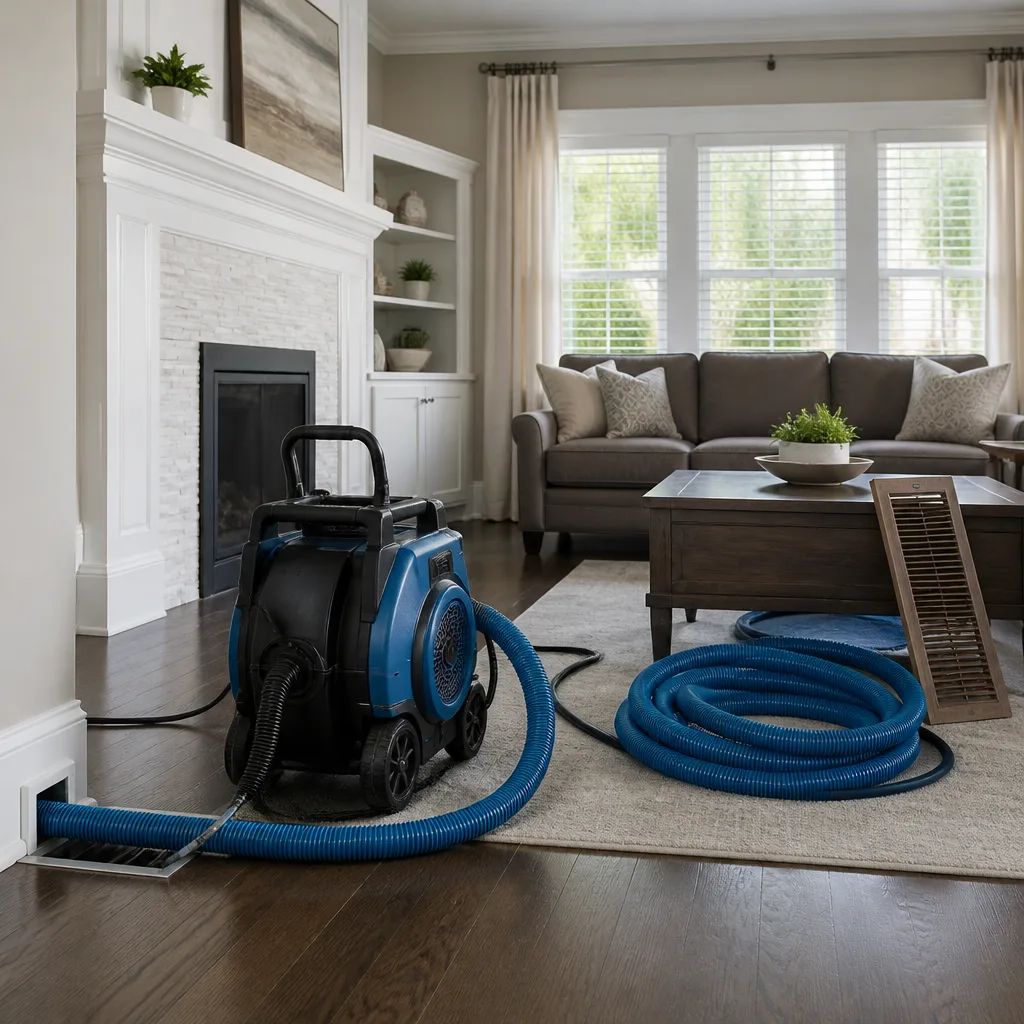 Whole-home duct cleaning
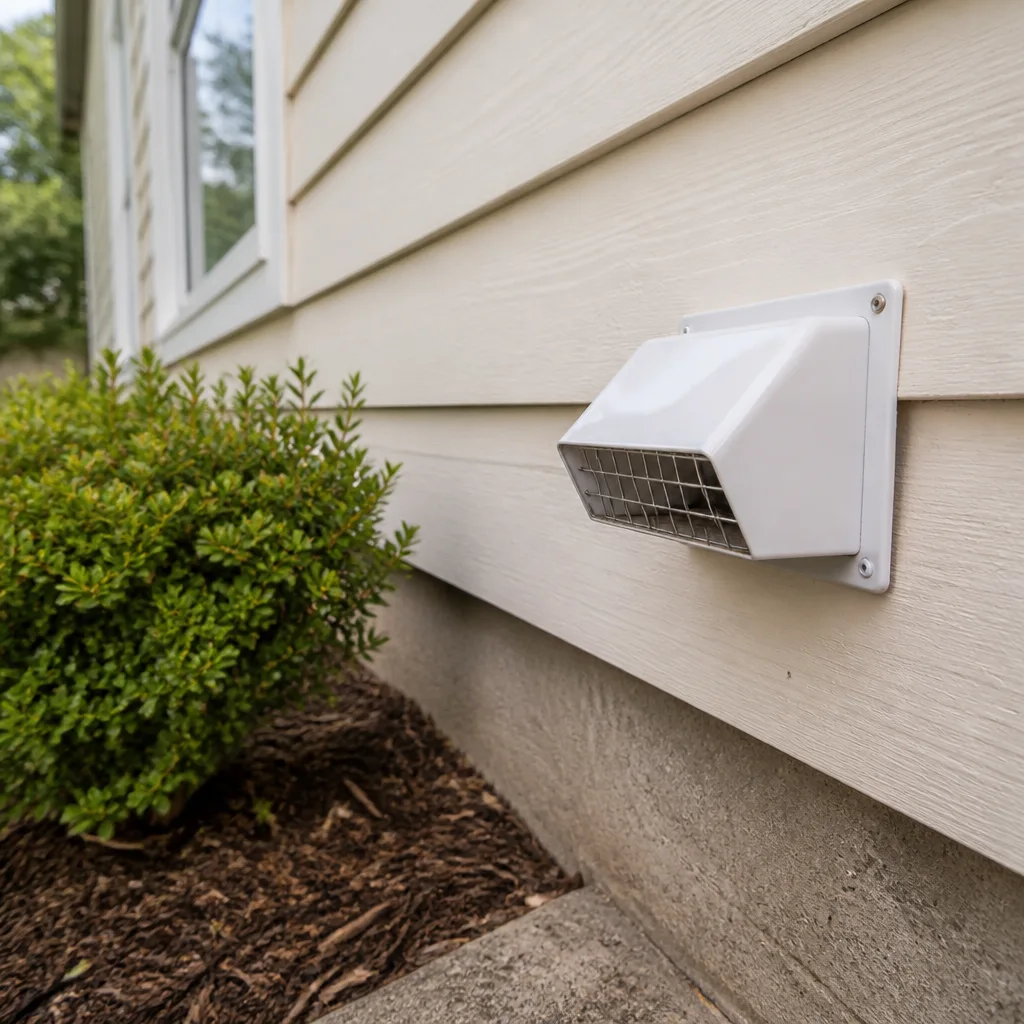 Dryer vent cleaning
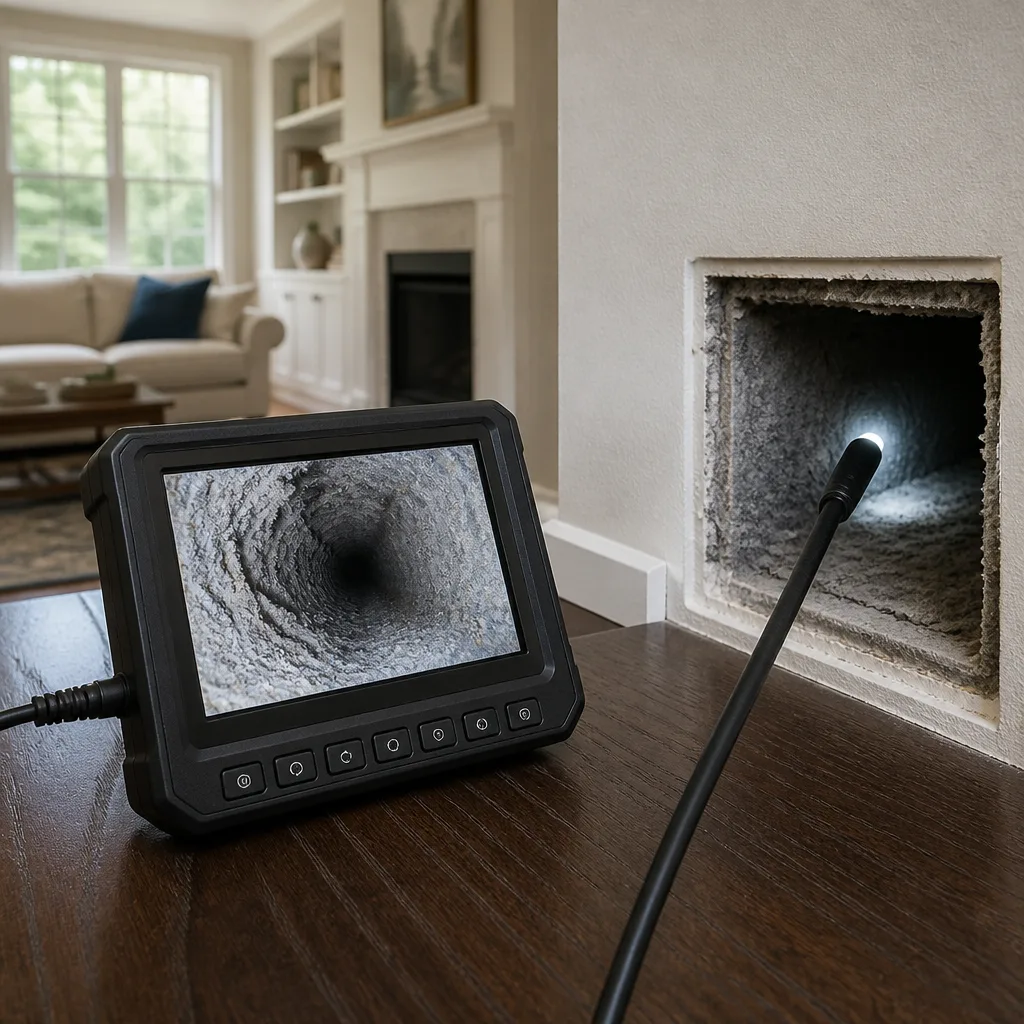 Camera inspection
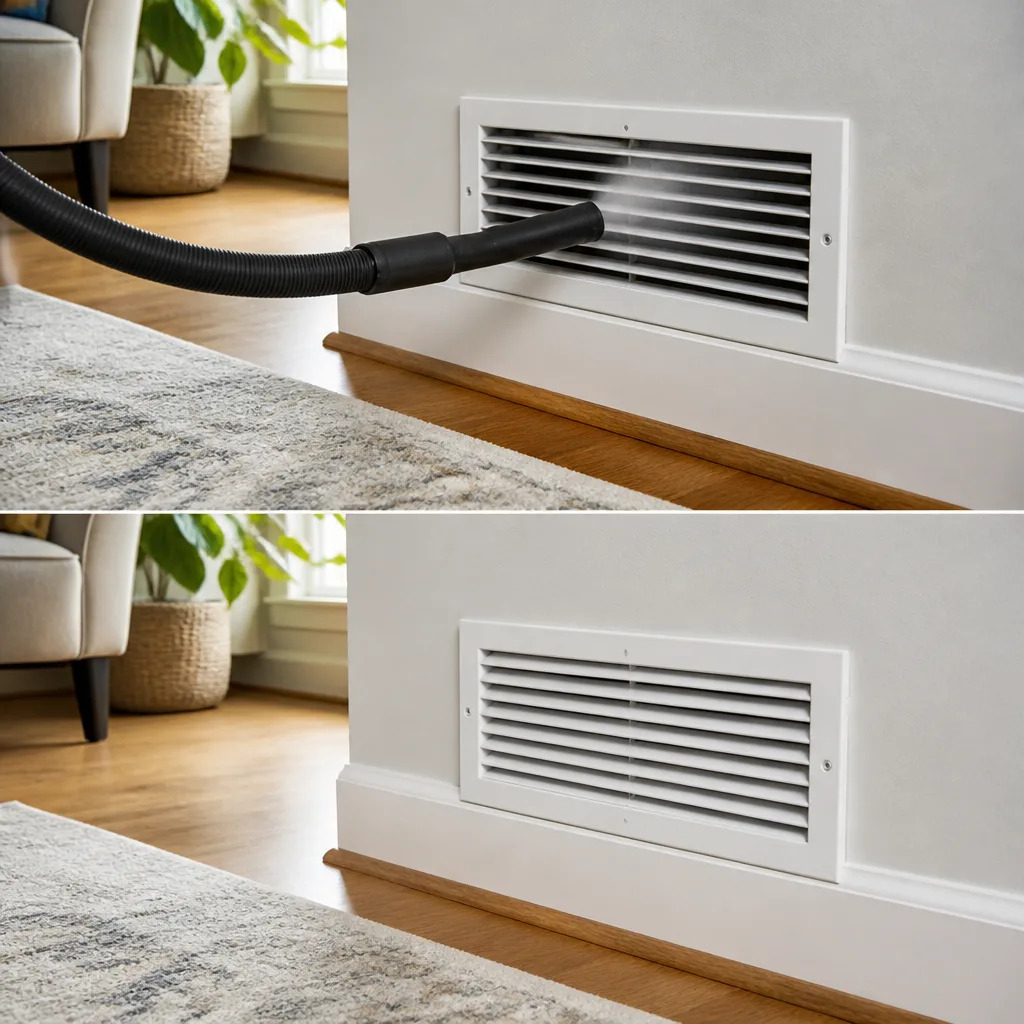 Sanitizing & deodorizing
Whole-system duct and dryer vent check with before-and-after photos - you see exactly what came out of your vents
That "$99 whole-house special" is a bait ad - the real number appears once they are in your hallway, or the "clean" is a shop-vac at the register. We photograph the inside of your ducts before and after instead.
The Complete Guide to Air Duct Cleaning in Thornton
A shop-vac generates a fraction of the suction a truck-mounted negative-air machine pulls, yet both get advertised as “professional duct cleaning” on plenty of pages aimed at Thornton homeowners. That gap between the label and the equipment is where most of the confusion lives. This guide is our attempt to fix that: what a real cleaning sequence looks like, how professional machines actually differ from consumer gear, why the dry high-altitude air along the Front Range loads ducts differently than humid climates do, and what before-and-after documentation should genuinely show you. You’ll come away able to judge whether a contractor is doing the work or just performing it.
Quick Answer
Air duct cleaning in Thornton means pulling every supply and return register, setting up negative air with HEPA filtration so dislodged debris is captured instead of blown back into the room, agitating the duct walls with a rotary brush system, and then verifying the result before the crew leaves. The full job covers the ducts, coils, blower and plenum, not just the branches you can see. A legitimate crew documents the before-and-after with photos taken inside the system and fixes any crushed or disconnected ductwork on the same visit.
Styles & brands we work with
- Whole-home duct cleaning
- Dryer vent cleaning
- Camera inspection
- Sanitizing & deodorizing
Table of Contents
- What separates professional duct cleaning equipment from a shop-vac?
- What does a legitimate cleaning sequence look like, start to finish?
- Why does Thornton’s dry, high-altitude air change the picture?
- What’s the difference between cleaning ducts and cleaning the full system?
- What should before-and-after documentation actually include?
- How does cleaning work around Honeywell and Aprilaire systems?
- Why is dryer vent cleaning part of the same conversation?
- What does air duct cleaning cost in Thornton, and why are cheap quotes so far off?
What separates professional duct cleaning equipment from a shop-vac?
The honest answer is airflow and containment. A wet/dry shop-vac pulls a small fraction of the air volume that a negative-air machine does, and it filters poorly, so whatever it loosens often ends up airborne in the room rather than captured. Professional duct cleaning works the opposite way: high volume to move debris, HEPA filtration to trap it, and a sealed containment setup so the house doesn’t become the filter.
The equipment we run is the equipment commercial and restoration contractors run. Rotobrush rotary-brush systems agitate the duct walls from the inside, which matters because dust doesn’t sit loose in a channel; it clings to the surface and only releases under mechanical contact. Nikro HEPA-rated vacuum systems capture displaced debris rather than recirculating it. And we bring Abatement Technologies negative-air and HEPA-filtration equipment into ordinary residential cleanings, which is containment discipline usually reserved for remediation work. Professional-grade equipment, not a shop-vac and a coupon.
What that means for you in practice:
- Debris is captured at the source instead of settling on your furniture after the crew leaves.
- Rotary brushing reaches the length of each branch, not just the first few feet past the register.
- HEPA-rated containment keeps fine particulate out of the air you’re breathing during the job.
- The result is verifiable, because the equipment can show it and photograph it.
When you compare estimates in Thornton, ask what machines will be on site. The answer tells you most of what you need to know.
What does a legitimate cleaning sequence look like, start to finish?
A real job follows a sequence, and the order is not arbitrary. Skip a step and the rest of the work degrades. Here’s how a proper cleaning runs:
- Walkthrough and system inspection. Before anything moves, the crew maps the system, checks for crushed flex runs, disconnected joints, and obvious microbial growth, and confirms where the return and supply trunk lines sit.
- Register and vent pulls. Every supply and return cover comes off so the branches can be accessed from both ends. This is also when the crew checks for obstructions that a brush shouldn’t hit blindly.
- Negative air setup. The vacuum and containment equipment connect to the main trunk, pulling the system under negative pressure so loosened material travels toward the machine rather than into living space.
- Agitation. Rotary brushes work each branch and the trunks, contacting the walls where debris actually bonds. Compressed air follows where geometry calls for it.
- Component cleaning. The blower, evaporator coil and plenum get attention, since they collect the same dust the ducts do.
- Post-verification. The crew photographs inside the cleaned runs, re-seats every register, and reports anything that needs repair. We also repair what we find, so a damaged joint gets fixed before the system goes back together.
That last point matters. Plenty of cleaners will point out a broken duct and then hand you a second contractor’s phone number. Cleaning, repair, and dryer vent service in a single visit is the whole reason we offer duct repair as a named service rather than an afterthought.
Why does Thornton’s dry, high-altitude air change the picture?
Thornton sits at roughly 5,000 feet along the northern Front Range, and the climate here is dry. Winter indoor humidity routinely sits low, and the air carries a steady load of fine particulate: windblown soil, pollen in season, and drywall dust from the construction this city has seen for years. Dry air changes how that material behaves inside a duct system.
In humid climates, dust tends to clump and settle faster. Here, fine particles stay light and mobile longer, which means they travel further into the system and lodge deeper in the branches and on the coil fins. A homeowner in a newer Thornton subdivision who has watched the housing go up around them is often breathing the byproduct of that construction: gypsum dust that migrated into the returns during framing and never left. New-home buyers inherit an unknown HVAC history, and in this market that history is frequently a dusty one.
Two practical consequences:
- Fine particulate accumulates in places a quick surface pass won’t reach, which is why agitation and full-system scope matter more than a coupon price suggests.
- Whole-home air-quality accessories earn their keep here, but only if the ducts feeding them are clean.
If you’re researching what this looks like in more detail, our air duct cleaning page walks through the service itself. The climate is the reason we treat fine-particle capture as the core of the job rather than a buzzword.
What’s the difference between cleaning ducts and cleaning the full system?
Cleaning the ducts means cleaning the branches. Cleaning the system means the branches plus the components that move and condition the air: the blower wheel, the evaporator coil, the plenum, and the trunk lines. The distinction is the single most common gap in residential duct cleaning, and it’s the one homeowners are least equipped to spot.
The coil is a good example. Evaporator coils are wet for much of the cooling season, which makes them a collection point for the fine dust Thornton’s dry air carries. A dirty coil reduces airflow and efficiency and can harbor growth you’d rather not circulate. Cleaning branches without touching the coil leaves the dirtiest component in place. The blower wheel has the same problem: dust accumulates on the blades, throws them out of balance, and drags on performance.
A full-system cleaning addresses:
- Every supply and return branch, brushed and vacuumed under negative air.
- The trunk lines, which carry the heaviest load.
- The blower assembly and fan cage.
- The evaporator coil and its fins.
- The plenum and the connections between major sections.
Ask any contractor whether their scope includes the coil and blower. If the answer hedges, you’re buying a branch cleaning marketed as a system cleaning. For anyone comparing what a full job involves in this part of the metro, the Thornton service overview lays out the local picture.
What should before-and-after documentation actually include?
Photos of a shiny register cover prove nothing. Real documentation comes from inside the system: images of the duct interior, the coil, and the plenum before the crew starts and after verification, paired so you can see the same location twice. That’s the standard we hold ourselves to, and it’s a reasonable thing to demand of any contractor.
Here’s what to request, and what a legitimate crew should be able to provide without arguing:
- Matched before-and-after images of the same interior locations, not just the vents in your living room.
- Photos of the coil and blower if the scope claims to include them.
- A note on any debris volume or material found, including construction dust, pet hair, or anything that warrants attention.
- Findings on duct condition, especially disconnected joints or crushed flex runs.
- A short walkthrough at the end so you can see the result rather than take a verbal word for it.
Before-and-after photos of your own ducts are a core part of how we work, for a simple reason: documentation is how a homeowner knows the work was actually done. If a contractor can’t or won’t show you the interior of your system, that tells you something about the equipment and the process both.
How does cleaning work around Honeywell and Aprilaire systems?
Whole-home air-quality accessories add steps, and the crew needs to know the equipment. Homes in Thornton with Honeywell or Aprilaire systems, or with Guardsman components in the air path, carry premium hardware that expects compatible handling. Cleaning around a media filter cabinet, a humidifier bypass, or an air cleaner is not the same as cleaning a bare system, and a crew unfamiliar with the accessory can damage it or leave it out of the loop.
We service and are familiar with Honeywell and Aprilaire whole-home air-quality systems, so the work integrates with existing premium HVAC accessories rather than conflicting with them. Practically, that means identifying and protecting each component before negative air goes on, cleaning or replacing media according to the owner’s preference, and confirming the accessory is functioning after the system is reassembled. Your Honeywell or Aprilaire system deserves a compatible crew. If you’ve invested in air-quality equipment, a contractor who has never worked on one is a risk you don’t need to take.
If you’ve just moved in and aren’t sure what’s attached to the air handler, ask during the estimate. Identifying and working with these accessories is part of the job, not an upsell.
Why is dryer vent cleaning part of the same conversation?
Dryer vents are a fire risk, not a footnote. Lint accumulates in the vent run, restricts airflow, and creates the conditions for a fire. It’s one of the leading causes of residential house fires, and the fix is straightforward maintenance, not a sales pitch. The reason it belongs in a guide about air ducts is that both are air pathways in the same house, and a crew equipped for one is naturally equipped for the other.
Our three-service scope covers the full range of air-pathway maintenance a home needs under one call:
- dryer vent cleaning, clearing the full run from the dryer connection to the exterior termination.
- Air duct cleaning, full-system scope.
- Air duct repair, addressing what the cleaning uncovers.
Signs your dryer vent needs attention include clothes taking longer than they used to, a dryer that feels hot to the touch on the cabinet, and lint visible around the exterior vent hood. None of those are emergencies, but all of them mean the vent is restricted. Handling it during a duct appointment saves you scheduling a second visit for a job that takes a fraction of the time.
What does air duct cleaning cost in Thornton, and why are cheap quotes so far off?
We price per system, not per vent, and we agree one flat price before any work starts. Per-vent pricing rewards a contractor for counting rather than cleaning, and it’s the mechanism behind the bait-and-switch reputation this trade has earned. The written estimate sets the final price.
The other reason cheap quotes diverge is that they describe a different job. A low figure typically covers a surface pass with consumer-grade equipment, no negative air, no coil or blower, and no documentation. A full-system cleaning with rotary agitation and HEPA containment is a larger job performed with more expensive equipment. Both get called “duct cleaning,” which is why the price gap looks bigger than the service difference until you ask what’s included.
When you get estimates in Thornton, compare three things, not one:
- Scope. Branches only, or branches plus coil, blower, and plenum?
- Equipment. Which machines will be on site, and do they include HEPA filtration?
- Documentation. Before-and-after photos from inside the system?
Comparing those three lines tells you more than the number at the bottom. A quote that looks higher but covers the full system is often the less expensive job per component cleaned. If you’re also considering how much a full maintenance appointment should run, our Duct Cleaning Thornton overview and the FAQ below cover the realistic range. Call (888) 495-2236 for an exact quote on your specific system; estimates are free.
Common Mistakes to Avoid
- Letting the price come before the scope. A number without a scope is a number for an unknown job. Ask what’s cleaned, what equipment is used, and how the result is documented before you compare quotes.
- Accepting “professional cleaning” with no equipment named. Every page says professional. Ask which systems will be on site; if the answer is vague, so is the work.
- Cleaning the branches and skipping the coil and blower. In Thornton’s dry air, the coil is a collection point for fine dust. A branch-only cleaning leaves the dirtiest component untouched.
- Skipping the dryer vent because the ducts are on the list. They’re separate pathways, and the vent is the one with fire risk attached.
- Ignoring a damaged duct to avoid a second appointment. A crushed flex run or disconnected joint undermines the whole cleaning. If the damage gets flagged and the contractor can’t repair it, you’ll be scheduling someone else anyway.
- Not asking what documentation you’ll receive. Photos from inside the system are how you verify the work. If none are offered, assume the interior wasn’t inspected.
- Assuming low humidity means clean ducts. Dry climates load ducts with fine, mobile particulate. Lower humidity doesn’t reduce the accumulation; it changes where it settles.
See the difference
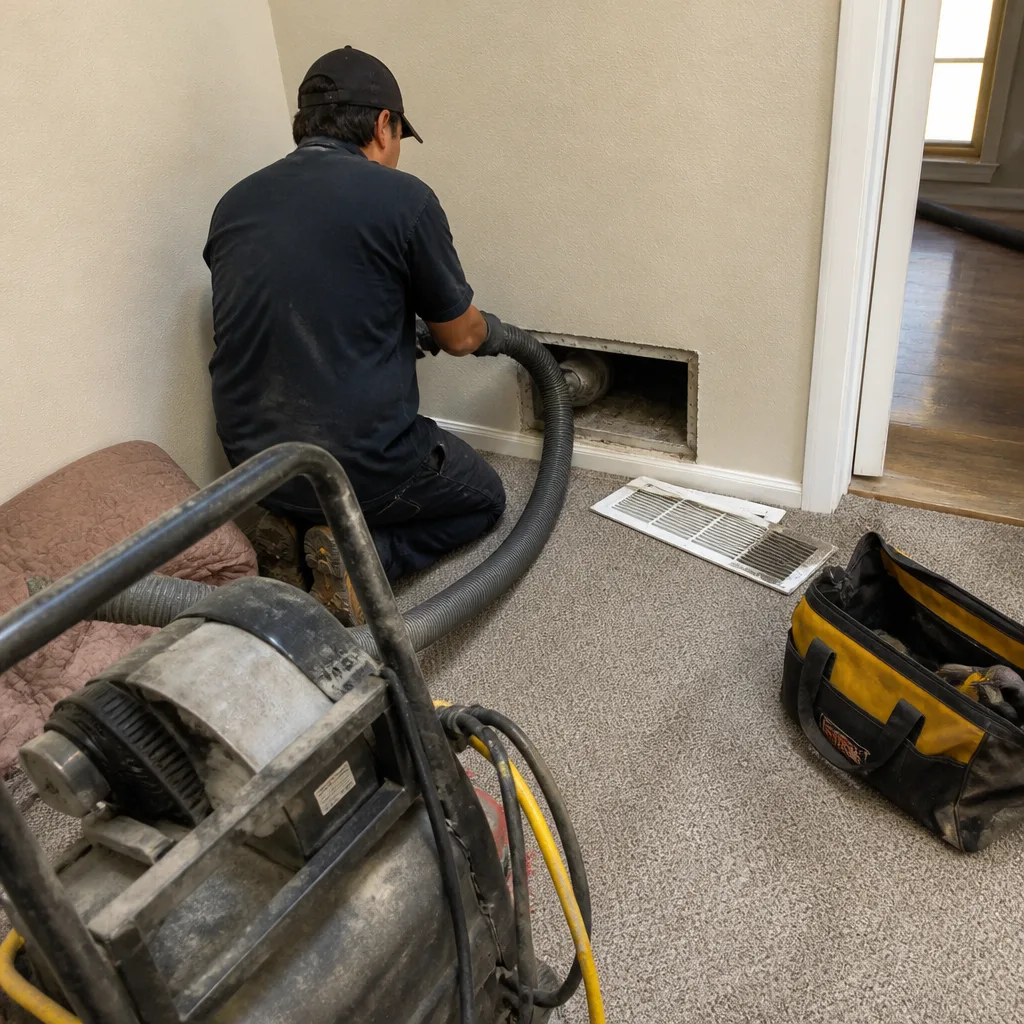 Before
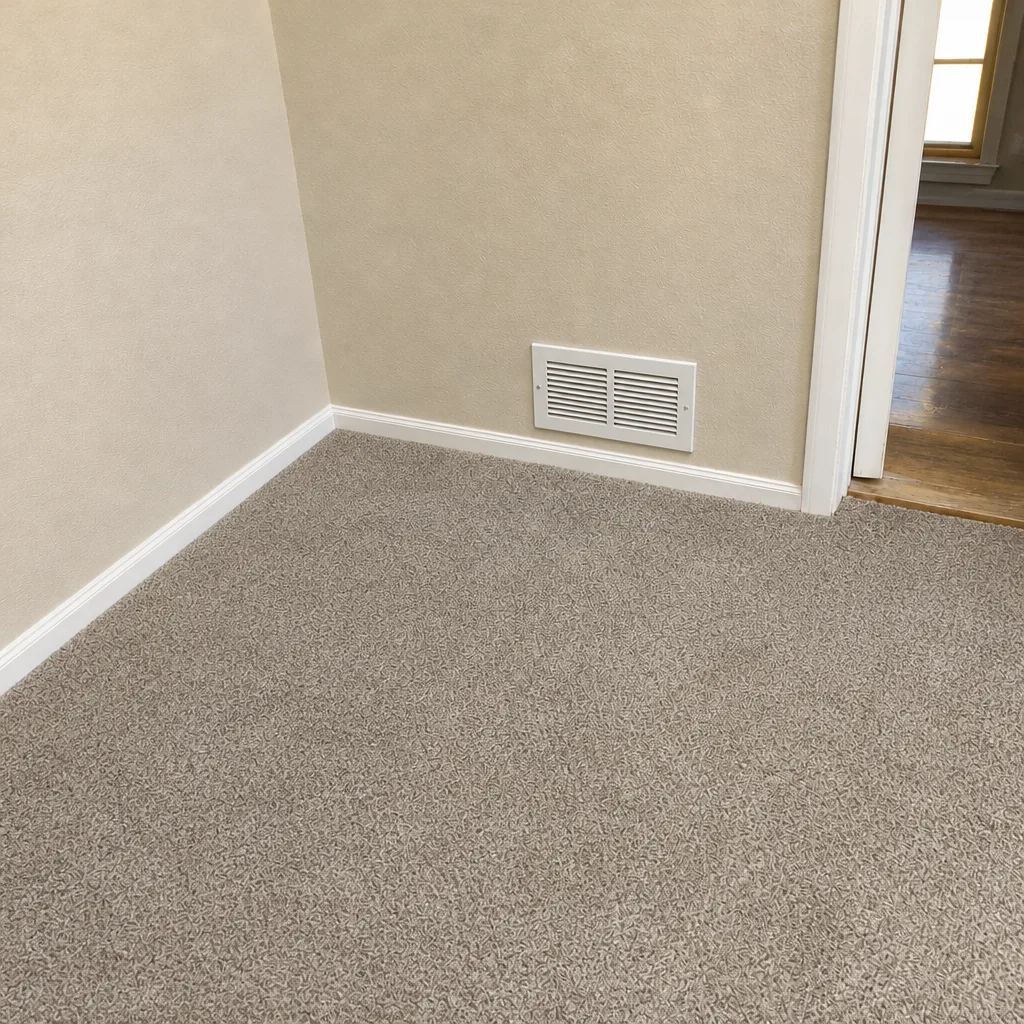 After
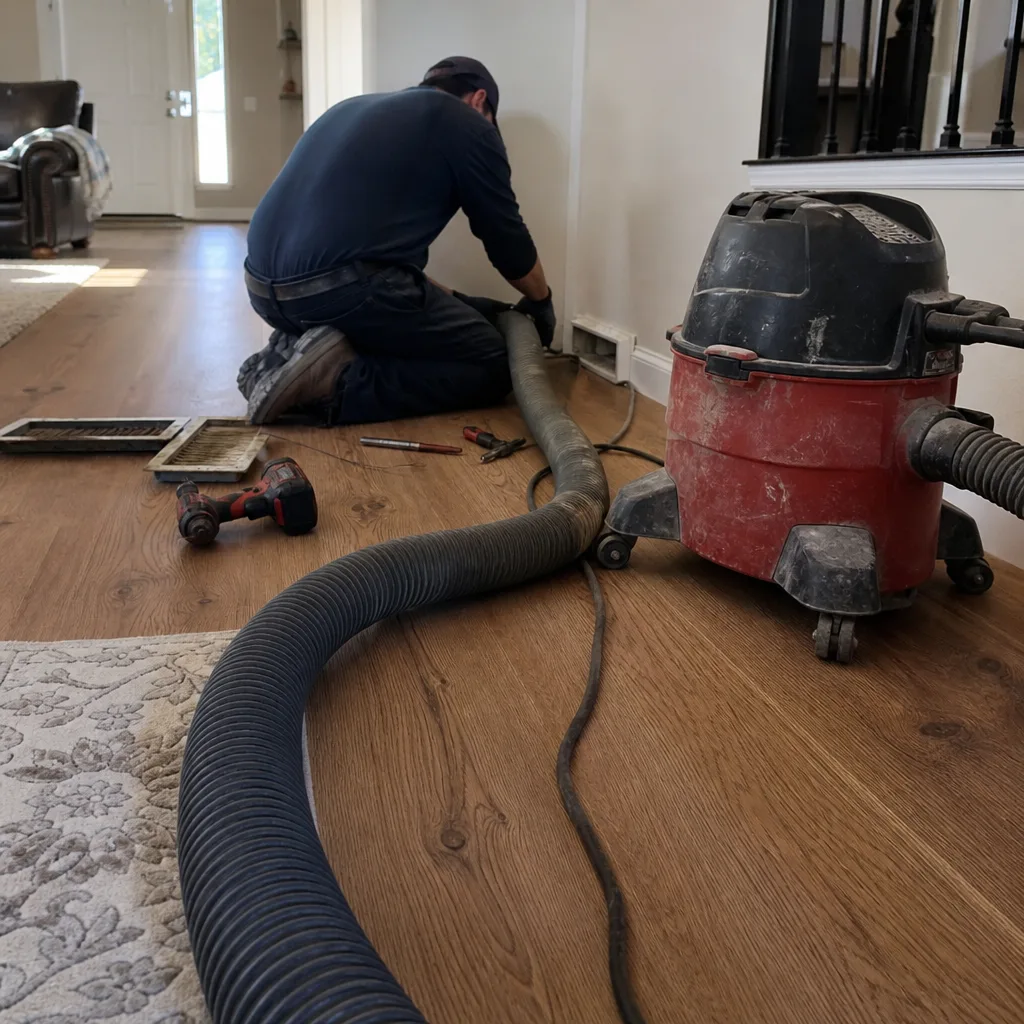 Before
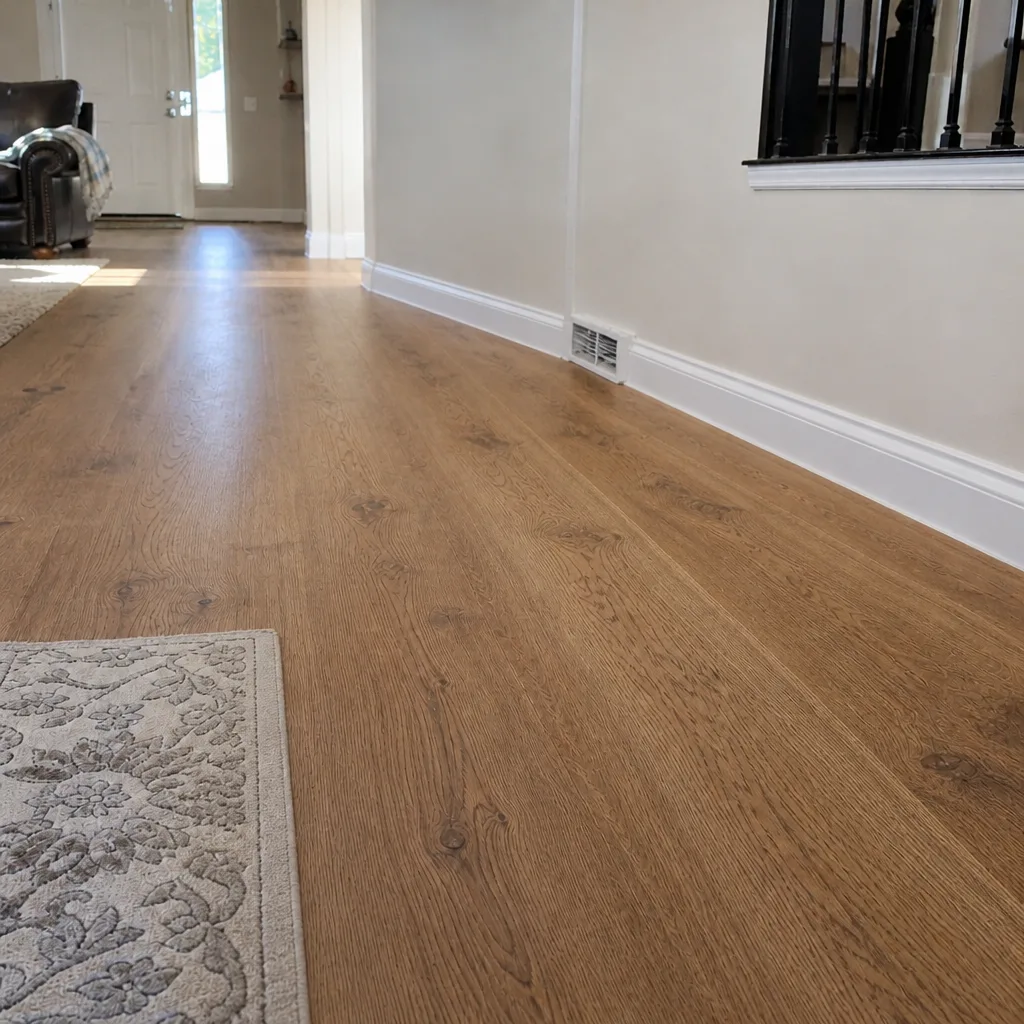 After
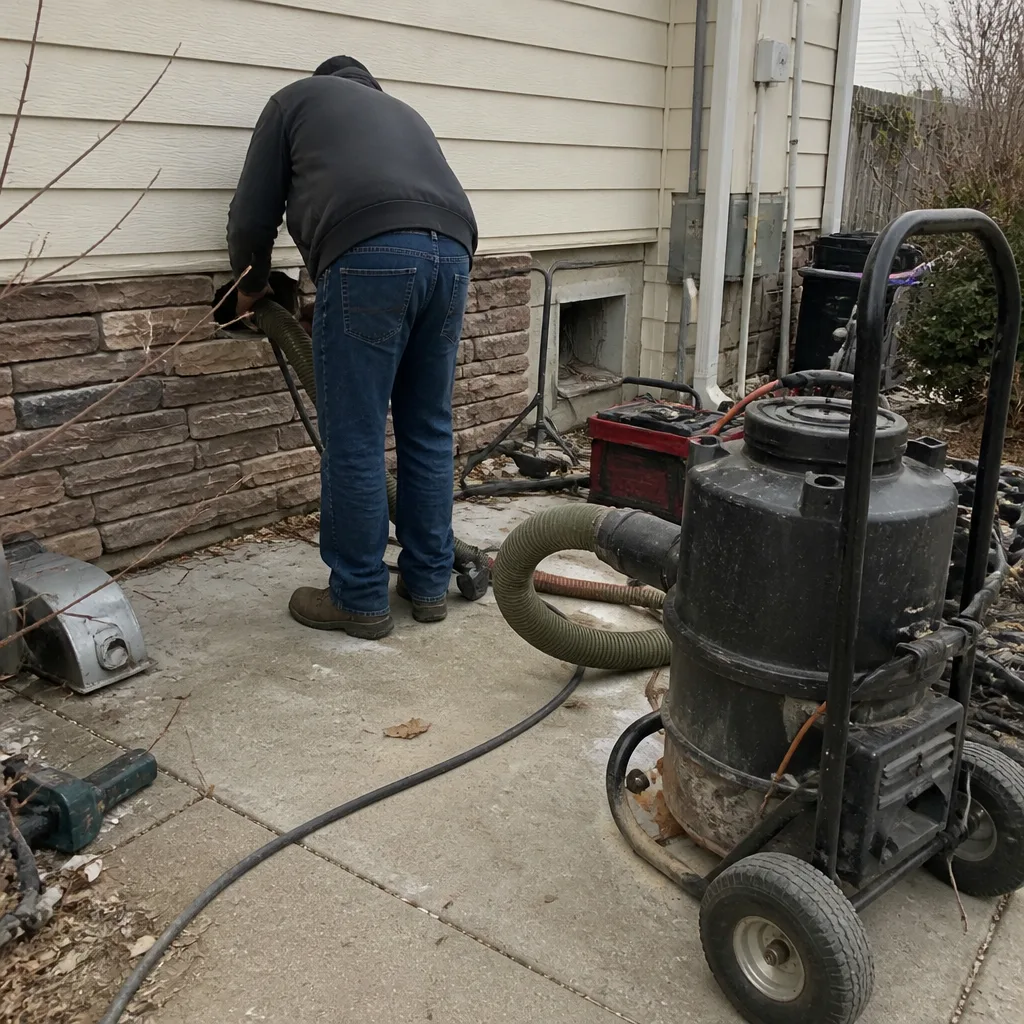 Before
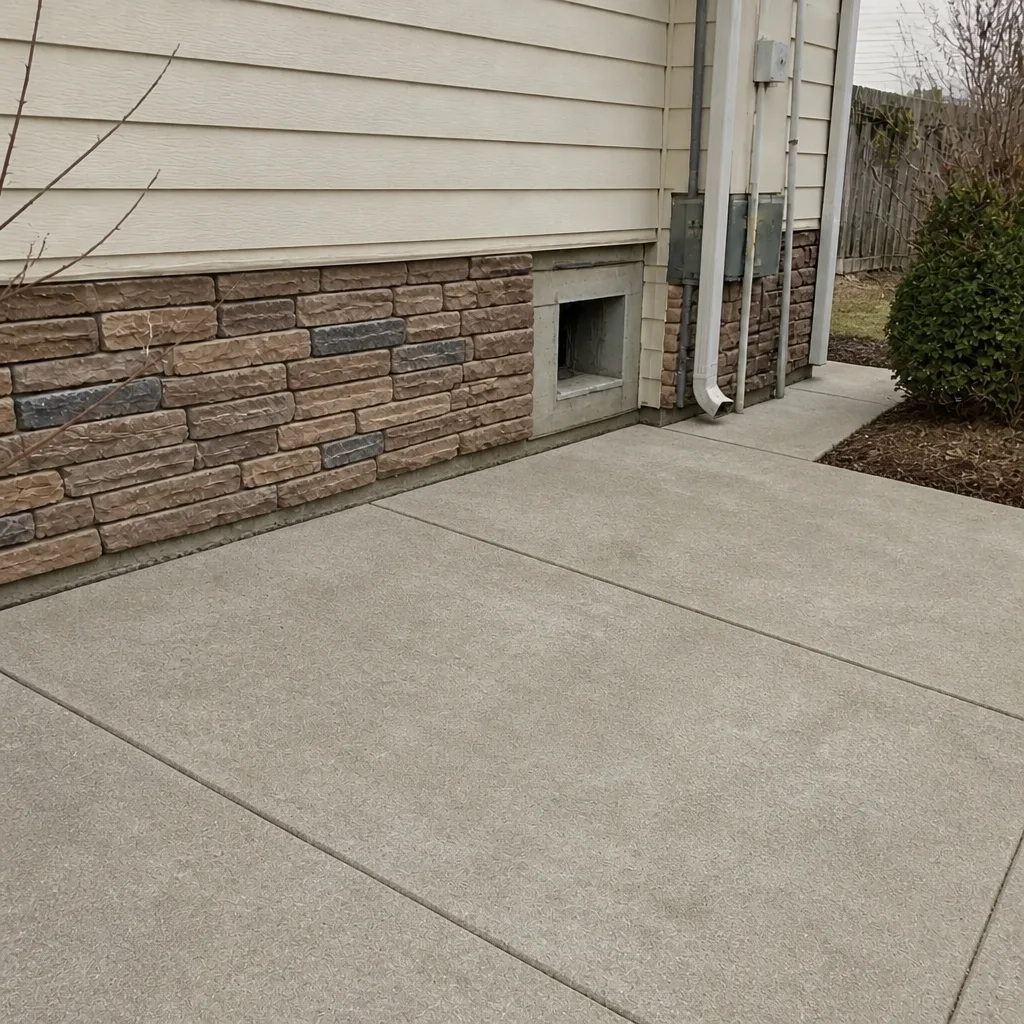 After
When to Call a Professional
Some situations call for a crew rather than another season of waiting. If anyone in the house deals with allergies and the system has never been cleaned, or if you’ve just bought a home in one of Thornton’s newer subdivisions and don’t know the HVAC history, an initial full-system cleaning establishes a baseline. If you’ve just finished a renovation and watched drywall dust disappear into the returns, that dust is still in there, and shop-vac suction isn’t going to pull it out. Crushed or disconnected ductwork is another clear signal: the system is losing conditioned air, and it needs repair, not just a clean. Households with Honeywell or Aprilaire accessories deserve a crew that knows the equipment. Our technicians have up to 12 years of experience, and our equipment includes Abatement Technologies negative-air filtration. Duct Cleaning Thornton offers free estimates in Thornton. Call (888) 495-2236. We answer 24/7. Fast dispatch from 7am to 7pm, Sunday through Friday.
Frequently Asked Questions
We price per system, not per vent, and the written estimate sets the final price. The realistic range depends on square footage, the number of branches, whether the coil and blower are included, and the condition of the ductwork. A full-system cleaning with rotary agitation, HEPA containment and repair of any damaged runs sits at the higher end because it’s a larger job. Call (888) 495-2236 for an exact quote; estimates are free.
Because they describe a smaller job. A low quote usually means consumer-grade equipment, no negative air, no coil or blower cleaning, and no documentation. The work is being done with less equipment and fewer steps, so the price reflects it. Ask what’s included in each estimate and compare scope before you compare price. Call (888) 495-2236 if you’d like ours in writing.
Request before-and-after photos taken inside your ducts, at the coil and blower, and at the trunk lines, and walk through the result with the crew before they leave. Documentation is the difference between a claim and evidence, and a legitimate contractor should provide it as a matter of course. Call (888) 495-2236 to ask what documentation comes with our cleaning.
Most homes benefit from a full-system cleaning every three to five years, and sooner after a renovation, a move into a home with unknown HVAC history, or if the ducts were never cleaned. Dry, dusty air along the Front Range accelerates fine-particle buildup, so the upper end of that range is more realistic for Thornton homes. Call (888) 495-2236 if you’re unsure whether your system is due.
Yes. Duct repair is one of our three core services, so crushed flex runs, disconnected joints and similar damage get fixed on the same visit rather than referred to a second contractor. Cleaning, repair, and dryer vent service in a single visit is how we’ve set up our scope. Call (888) 495-2236 to have the system assessed.
Both. Dryer vent cleaning is part of our service lineup, not an add-on, because lint buildup in the vent is a fire risk worth addressing with the same seriousness as duct cleaning. If it’s been more than a couple of years since the vent was cleared, add it to the appointment. Call (888) 495-2236 to schedule both in one visit.
No. We service and are familiar with Honeywell and Aprilaire whole-home air-quality systems, so components are identified and protected before negative air goes on, and checked afterward. Owners of premium accessories are better served by a crew that knows the hardware than one that doesn’t. Call (888) 495-2236 to discuss your setup.
The Bottom Line
Duct cleaning in Thornton is a process with steps, equipment and verification, and the label on the side of the van tells you very little. Ask what machines will be on site, whether the scope covers the coil, blower and plenum or just the branches, and what documentation you’ll receive. Full-system cleaning with rotary agitation and HEPA containment is the job worth paying for, and any damage found should be repaired in the same visit, not deferred to a second contractor. Our technicians have up to 12 years of experience, and our estimates are free. Call (888) 495-2236. We answer 24/7. Fast dispatch from 7am to 7pm, Sunday through Friday.
Written by the team at Duct Cleaning Thornton.