
Last updated November 15, 2026
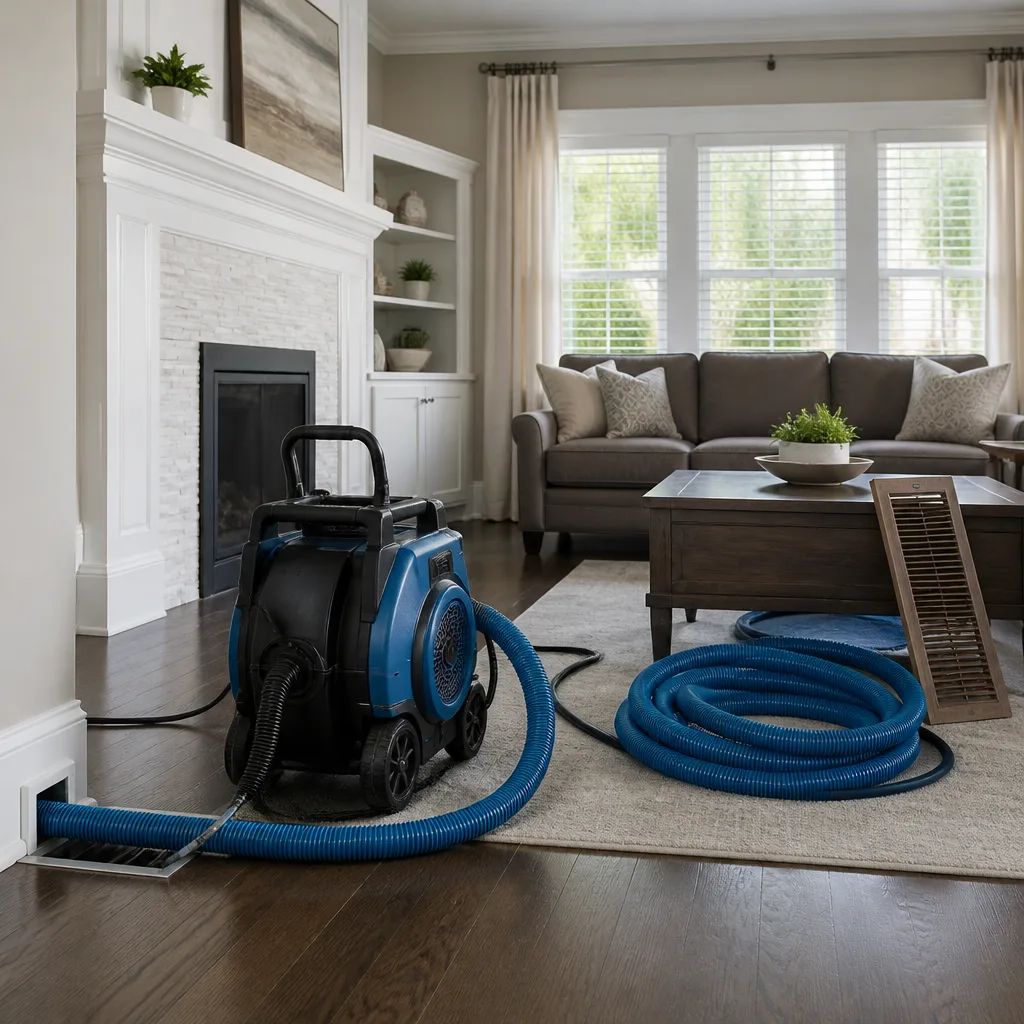 Whole-home duct cleaning
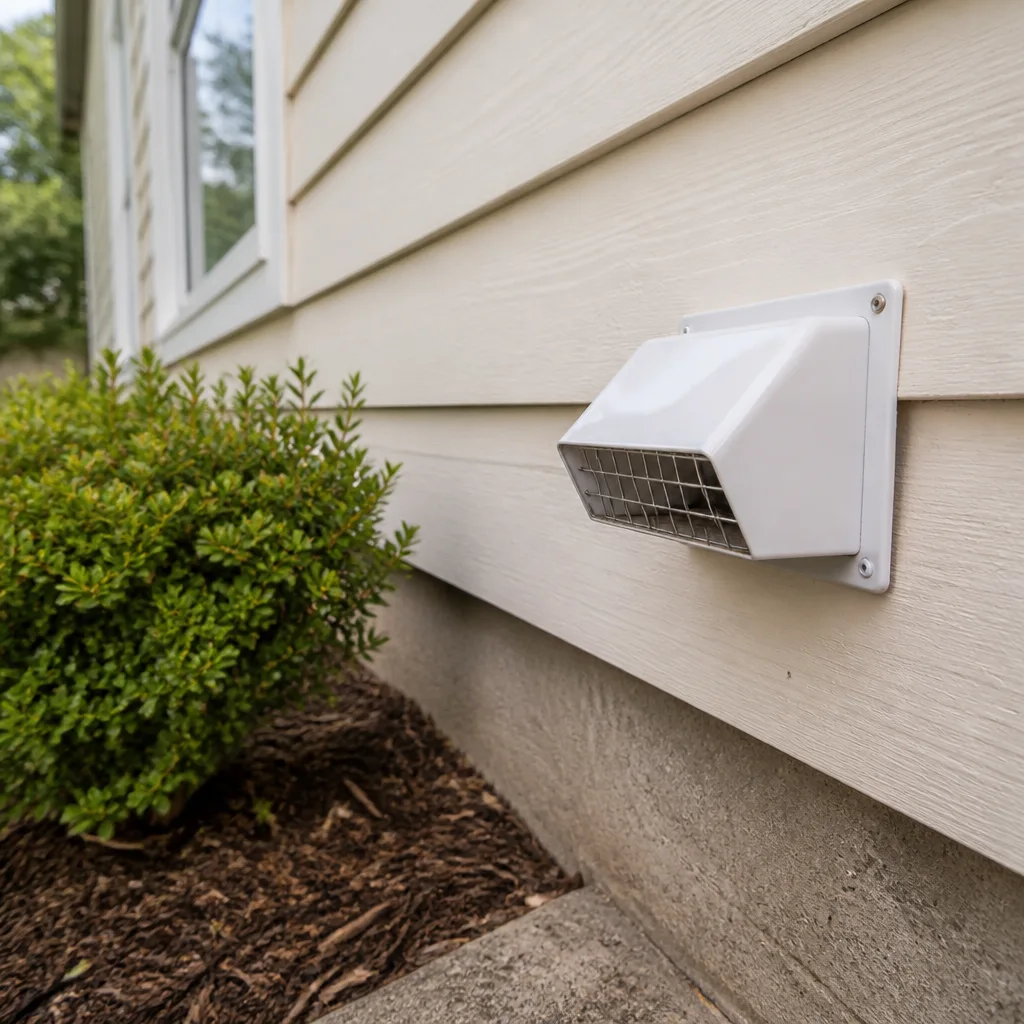 Dryer vent cleaning
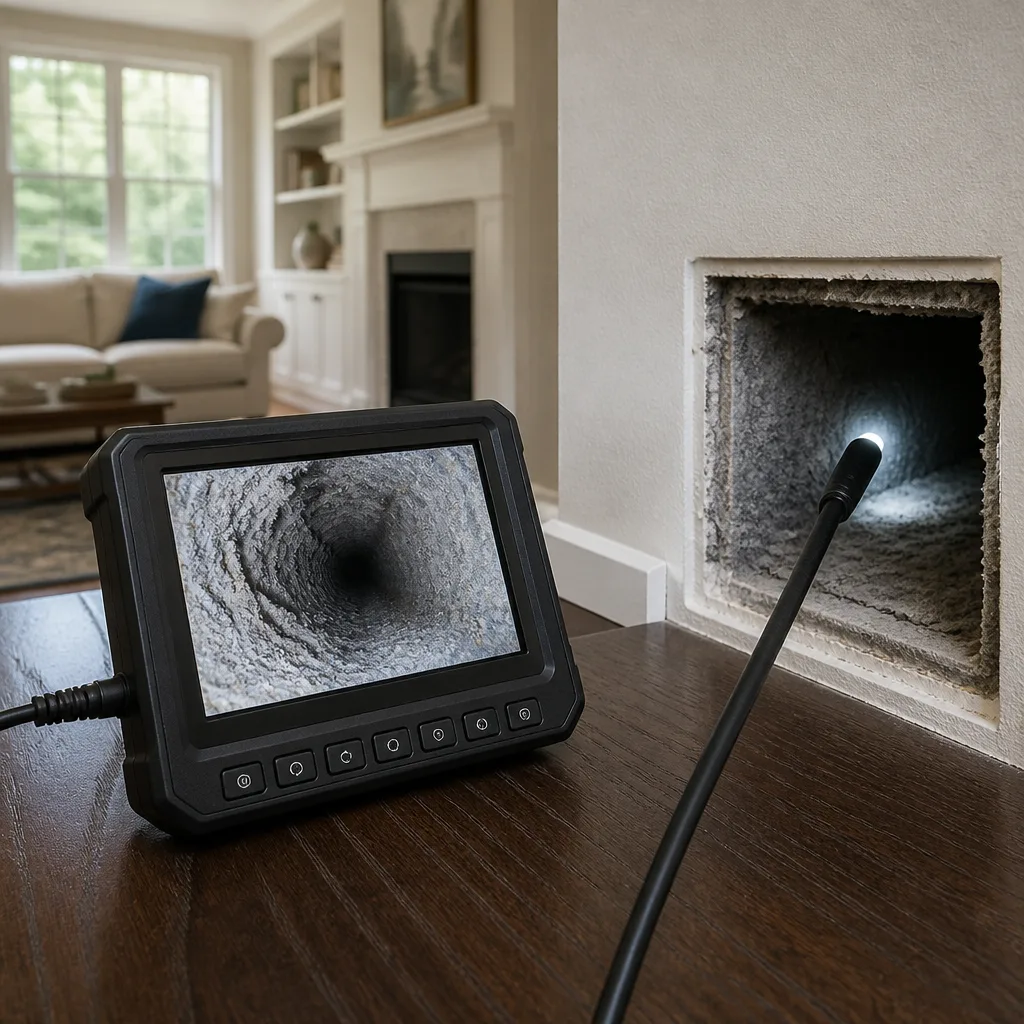 Camera inspection
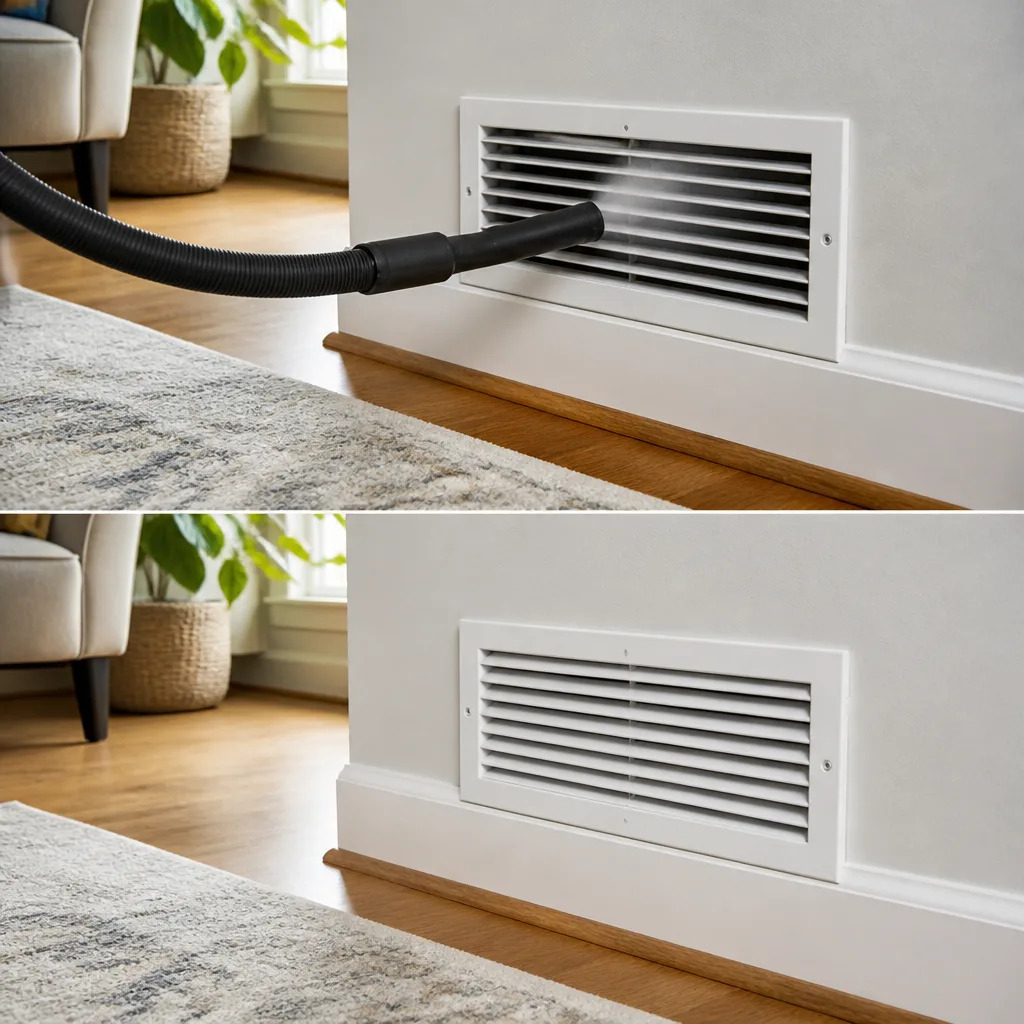 Sanitizing & deodorizing
Whole-system duct and dryer vent check with before-and-after photos - you see exactly what came out of your vents
That "$99 whole-house special" is a bait ad - the real number appears once they are in your hallway, or the "clean" is a shop-vac at the register. We photograph the inside of your ducts before and after instead.
Air Duct Cleaning Warning Signs: A Thornton Homeowner’s Reference Guide
Here’s a fact that surprises a lot of people: dust on your registers right after a cleaning doesn’t mean the cleaning failed. Most of the time it means there’s a leak in the duct system pulling unconditioned air from your attic or crawlspace, and no amount of vacuuming will close that gap. That single distinction, between a cleaning problem and a repair problem, is what this guide is built around. We’ll walk through the warning signs that actually matter, what each one usually points to, and where the line sits between “schedule a cleaning” and “get a camera inspection.” It’s written for Thornton homeowners who want to know what they’re looking at before they pick up the phone.
Quick Answer
The main warning signs of dirty or failing air ducts are visible dust blowing from registers shortly after a cleaning, uneven airflow between rooms, musty or chemical odors when the system runs, and unexplained allergy symptoms that ease when you leave the house. In Thornton’s 1970s through 1990s housing stock, the most common culprits are degrading duct liner, sagging flex duct, and loose joints that leak air from unconditioned spaces. A cleaning solves contamination; a leak, mold colony, or pest problem needs repair or inspection first.
Styles & brands we work with
- Whole-home duct cleaning
- Dryer vent cleaning
- Camera inspection
- Sanitizing & deodorizing
Table of Contents
- Is it dust or is it a leak?
- Airflow imbalance as a diagnostic signal
- Odor taxonomy: musty, burning, and chemical smells
- What Thornton’s older housing stock is prone to
- Pest infiltration and mold colonization
- When a warning sign crosses into camera inspection
- Dryer vents: a separate warning-sign checklist
- Common mistakes to avoid
Is It Dust or Is It a Leak?
This is the first thing to sort out, because the two problems have different fixes and different costs. Normal dust reaccumulation is gradual. You clean a register, it stays clean for weeks, and a fine film builds back over time. That’s just life in a house with a forced-air system. Leak-driven dust behaves differently. It shows up fast, often concentrated around one or two registers, and it can look darker or grittier than household dust because it’s carrying attic insulation fibers or crawlspace soil.
Here’s how to tell them apart without any equipment:
- Timing. Dust returning within a few days of a cleaning points to a leak or a system that was never actually cleaned.
- Location. Dust concentrated at registers nearest the air handler, or in rooms closest to the attic access, suggests air is being pulled in from an unconditioned space.
- Texture. Gritty, dark, or fibrous residue is a leak signal. Soft gray house dust is usually ordinary accumulation.
- Pattern. Streaking around a register faceplate means air is escaping at the seam, not just blowing through the grille.
If you’ve had a cleaning and the dust came back within a week or two, a leak is the likeliest explanation. In our experience, this is where a lot of homeowners get sold a second cleaning they don’t need. What they actually need is a repair. That’s why we offer duct cleaning in Thornton and duct repair as separate but connected services: when a technician finds a disconnected joint or a torn flex run, it can be sealed or replaced in the same visit instead of sending you looking for a second contractor.
One more thing worth knowing: a system that was never cleaned properly can look “clean” at the register and still be loaded with debris deeper in the trunk line. Consumer-grade vacuums don’t generate enough negative pressure to move that material. Professional systems like Rotobrush rotary brushes and Nikro HEPA-rated vacuums do, and the difference shows up in what comes out of the duct, not in what the register looks like afterward.
Airflow Imbalance as a Diagnostic Signal
Every house has a room that never heats or cools as well as the rest. That’s not always a duct problem. But a consistent pattern of underperformance, especially when it’s gotten worse over time, is one of the most reliable diagnostic signals a homeowner can hand a technician. The room that underperforms tells you something about which part of the duct system is struggling.
Match the pattern to the likely cause:
- One room weak, others fine. Usually a single branch run with a disconnected joint, a crushed section, or a damper that’s partially closed. Often the cheapest thing to fix.
- Rooms at the end of the run underperform, rooms near the air handler are strong. Classic sign of static pressure loss. Could be a collapsed or sagging flex duct, or a trunk line that’s undersized for what’s been added to the system.
- Second floor weak, first floor fine. In two-story Thornton homes, this often traces to duct runs in an unconditioned attic that have lost insulation or come apart at a joint.
- Whole system weak. Might be a dirty evaporator coil, a failing blower, or a filter that’s never been changed. Not a duct problem, but worth ruling out.
- Rooms that used to be fine and now aren’t. Something changed. Flex duct sagging under its own weight, a joint that worked loose, or debris that’s accumulated over years.
If you’re in a Thornton home built in the 1980s or 1990s, sagging flex duct is worth taking seriously. Flex duct that sags more than it should restricts airflow and collects dust at the low points. Over time those low spots become the places where contamination concentrates. A cleaning addresses the contamination; repairing the sag or replacing the run addresses the cause.
One practical test: hold a tissue to each register while the system runs. It should pull firmly at every one. If some registers barely hold it and others won’t let go, you have an imbalance worth investigating.
Odor Taxonomy: Musty, Burning, and Chemical Smells
Smell is the most underrated duct diagnostic. Each odor family points at a different problem, and mixing them up wastes time and money. Here’s the breakdown we walk homeowners through.
Musty or earthy
A musty smell that gets stronger when the system runs usually means moisture and biological growth somewhere in the air path. The most common locations are the evaporator coil, the drain pan, or duct liner that’s stayed wet. In Thornton’s dry climate, moisture in a duct system is almost always a leak or a condensate problem rather than ambient humidity. That matters, because a duct that’s wet from a leak won’t dry out on its own, and cleaning it without fixing the source just resets the clock. A mold colony needs containment during removal, which is why we use Abatement Technologies negative-air and HEPA-filtration equipment on jobs where growth is suspected. Contaminant containment is standard practice in remediation work, and it belongs in residential cleanings too.
Burning or hot
A burning smell when the heat first kicks on can be ordinary dust burning off the heat exchanger, especially the first run of the season. But if it persists, or smells like hot plastic or overheated metal, shut the system down and get it checked by an HVAC technician. That’s not a duct cleaning issue and it’s not something to investigate yourself.
Chemical or solvent
A sharp chemical smell coming through the vents points to something getting into the air path from outside the system, or to a recent renovation where fumes were pulled into the return. Fresh paint, adhesives, or new flooring off-gassing can all find their way into the ductwork. This is one where you want the source identified first. Running the system to “air it out” just spreads the problem.
Owners of whole-home air quality systems have one more thing to check. If you have a Honeywell or Aprilaire air cleaner integrated with your HVAC, a clogged or expired media filter can produce its own odor. We service and work around both brands, so a cleaning visit doesn’t create a conflict with existing premium accessories.
What Thornton’s Older Housing Stock Is Prone To
Thornton grew fast in the 1970s, 1980s, and 1990s, and the duct systems from those decades are now old enough to show specific, predictable failure patterns. Knowing what your build era is prone to saves a lot of guessing.
- Duct liner degradation. Interior duct liner installed in the 1970s and 1980s was often coated with a thin facing. Over decades that facing can crack and flake, and the fibers underneath can enter the airstream. Liner in this condition isn’t fixed by cleaning alone. It’s repaired or replaced.
- Flex duct sagging. Widespread in 1980s and 1990s builds, especially in attics. Sagging traps dust, restricts airflow, and often coincides with joint separation.
- Asbestos-wrap adjacency. Some homes from this era have duct runs wrapped in materials that may contain asbestos. If your ducts are wrapped in a hard, gray, paper-backed material, do not handle it. Have it identified by a qualified professional before any cleaning work begins. We will not disturb duct wrap that hasn’t been cleared.
- Insufficient attic duct insulation. Thornton attics swing between cold winters and hot summers, and duct runs that lost insulation in the attic lose efficiency year-round and give condensation a place to form.
- Joints that were never properly sealed. Older installs often relied on tape that’s since failed. Failed tape means leaks, and leaks mean dust pulled from the attic.
If you’re a new-home buyer in Thornton and you don’t know the HVAC history, this is exactly the checklist to bring to the inspection. Ask when the ducts were last cleaned, whether the liner was ever inspected, and whether any duct runs are wrapped in material of unknown composition. The answers will tell you a lot about what you’re walking into.
Renovation dust is another one worth naming. If you’ve had drywall work done, that fine white dust doesn’t disappear. It finds its way into the return and settles throughout the system. In that case, a cleaning is the right call once the work is complete, and it’s worth checking for leaks at the same time, since construction often disturbs duct connections.
Pest Infiltration and Mold Colonization
Two warning-sign categories get misread more than any others: pest activity and mold. Both can produce a smell, both produce debris, and both need to be handled before or alongside a cleaning.
Pest infiltration
Mice and other rodents find their way into duct systems through gaps at the foundation, around the air handler, or through attic penetrations. Signs to watch for:
- Droppings near the air handler, in the return plenum, or on top of duct runs.
- Scratching or scurrying sounds when the system starts, which often pushes pests along the ducts.
- Gnaw marks on flex duct or insulation. This is serious, because gnawed flex duct both leaks and provides an entry point.
- A sharp, ammonia-like odor that doesn’t fully clear when the system runs.
If you suspect pests, the sequence matters: seal the entry points first, then clean. Cleaning a duct system with active entry points just gives pests a fresh start. Flex duct that’s been chewed through is damaged ductwork. It needs repair, which is why we treat duct repair as a full part of our scope rather than an upsell.
Mold colonization
Visible mold on a register, a musty smell that strengthens when the system runs, or a known moisture event (a roof leak, a burst pipe, a flooded crawlspace) all point at possible growth inside the system. Two things to know. First, mold in a duct system requires moisture, so finding the moisture source is step one. Second, removal needs containment so spores aren’t spread through the house during the work. That’s where remediation-grade filtration earns its keep; standard vacuums without HEPA filtration can recirculate what they pick up.
If mold is confirmed, the work is more than a routine cleaning. Ask about containment, filtration, and post-cleaning verification before anything starts.
When a Warning Sign Crosses Into Camera Inspection
This is the question most homeowners actually want answered: at what point does this stop being a cleaning and start being an inspection? Here are the thresholds we use.
- You’ve had a cleaning within the last year and dust returns within two weeks. A leak is likely. Camera inspection to find it.
- You can see visible damage at a register or through an access point. Torn liner, cracked flex duct, or a disconnected run. Visual evidence means the system needs to be looked at, not cleaned around.
- Odors persist after a cleaning. If the musty smell is still there, the contamination source hasn’t been removed. A camera tells you where it lives.
- A room has been weak for years and it’s gotten worse. Especially if that room is at the end of a long run. Suspect a collapsed or obstructed section and get it inspected before the cold season.
- You’ve found pest evidence. Any sign of rodents, from droppings to gnaw marks, warrants looking inside the system for damage before cleaning.
- You’re a new owner in an older Thornton home and don’t have records. A camera inspection establishes a baseline and tells you what you’re dealing with.
- You’ve had water damage or a known moisture event in the last few years. Even if it seems dry, one look inside the system settles it.
Below those thresholds, a routine professional cleaning is usually the right answer. Above them, get the camera in the system first. Booking a cleaning on top of a problem it can’t fix just costs you twice.
Dryer Vents: A Separate Warning-Sign Checklist
Air ducts aren’t the only air pathway in a Thornton home that gives warning signs. Dryer vents are a fire risk, not a footnote, and the signs are worth knowing by heart.
- Clothes take longer than one cycle to dry, especially heavier items.
- The dryer itself feels hot to the touch on its top or side while running.
- The exterior vent flap doesn’t open fully when the dryer is on.
- Lint accumulates around the outside vent or the connection behind the dryer.
- A burning smell (distinct from a musty one) during the dry cycle.
- It’s been more than a year since the vent was last cleared.
Any of those signals is worth acting on. A cleared, unobstructed vent shortens dry times, sends heat out where it belongs, and reduces lint buildup where it can catch fire. We offer dryer vent cleaning alongside duct cleaning and repair, so the full air-pathway check happens in one visit if you want it to.
Common Mistakes to Avoid
- Assuming the cleaning failed when dust returns. Dust coming back within days usually means a leak, not a bad cleaning. Fix the leak before you schedule another cleaning.
- Booking a cleaning without a camera inspection when warning signs are loud. Visible damage, pest evidence, or persistent odor all need a look inside first. Cleaning over a real problem wastes money.
- Touching duct wrap of unknown composition. If the wrap on your ducts is hard, gray, or paper-backed, in a Thornton home from the 1970s or 1980s, don’t handle it. Get it identified by a qualified professional before any work.
- Buying on price alone from a company with a consumer-grade vacuum. A shop-vac and a promise won’t move what’s actually in the ducts. Ask what equipment the crew uses. Rotobrush and Nikro systems, with HEPA-rated filtration, are the standard.
- Ignoring the dryer vent because the ducts got attention. Dryer vents are a distinct fire risk. They need their own inspection and clearing.
- Skipping the filter question. A clogged filter mimics duct problems. If you have a Honeywell or Aprilaire whole-home air cleaner, check its media before assuming the ducts are to blame.
- Letting a company leave the house without before-and-after photos. You should see what came out of your own system, not a stock image.
See the difference
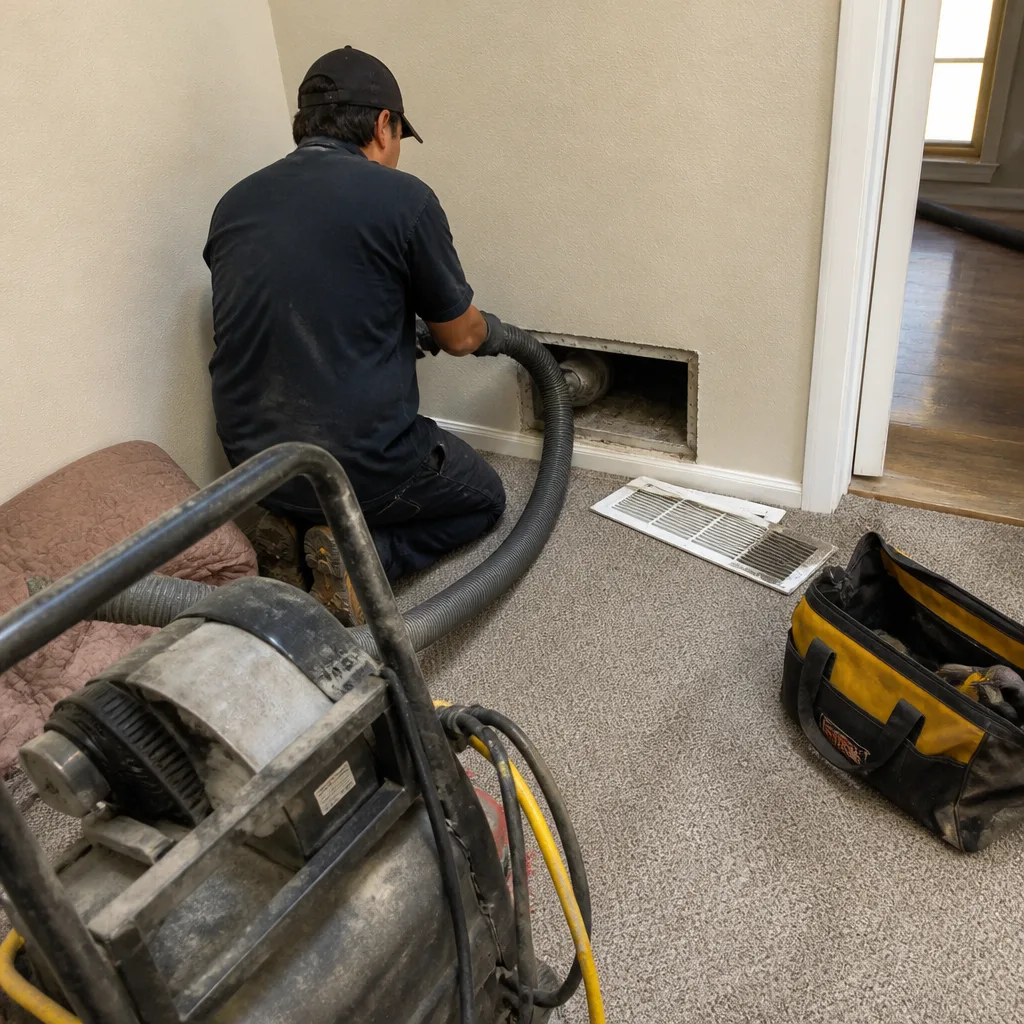 Before
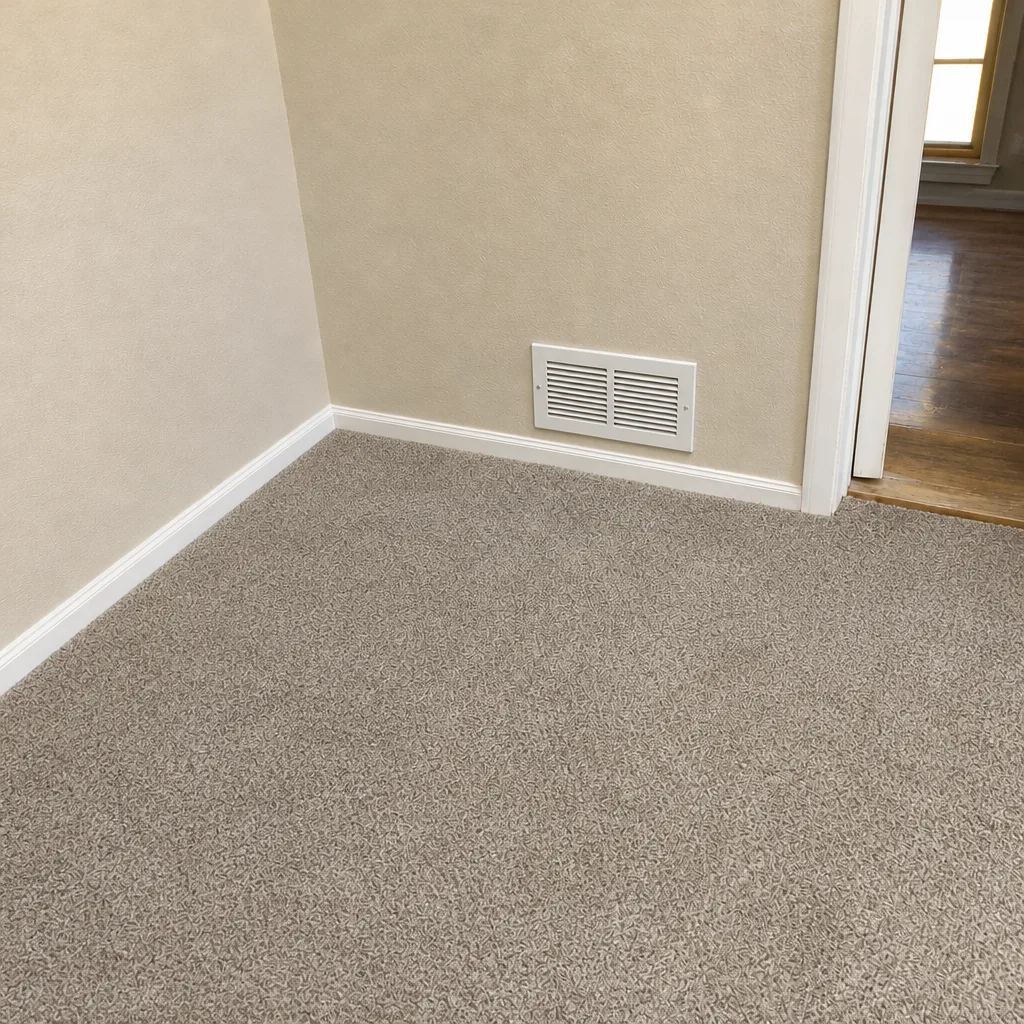 After
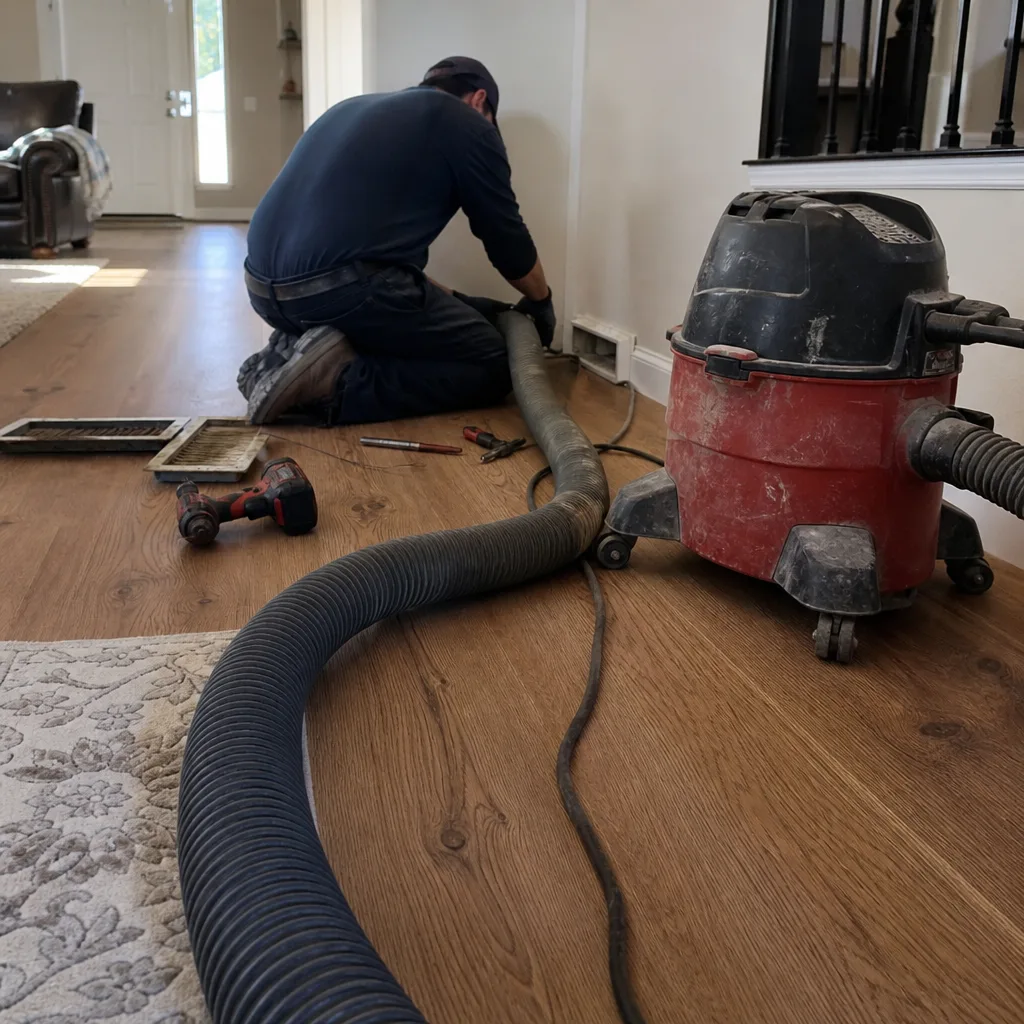 Before
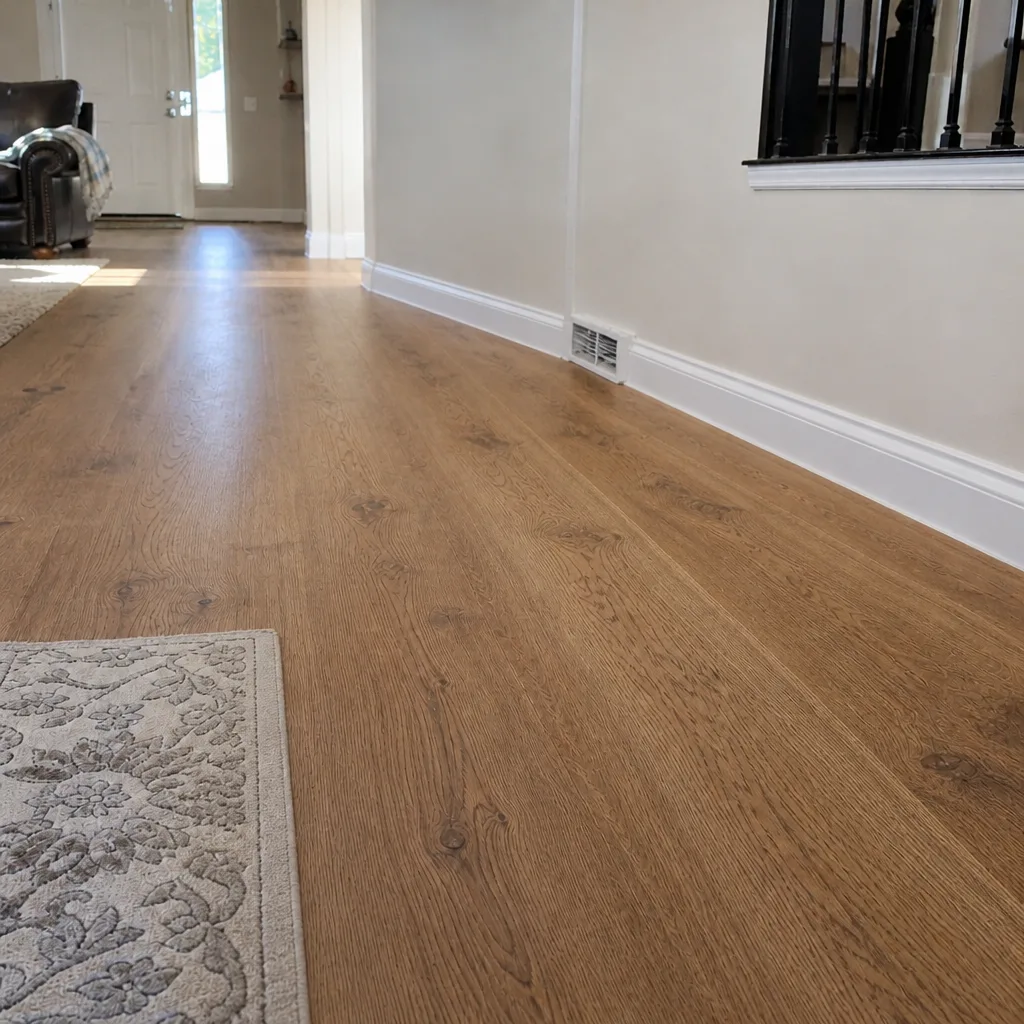 After
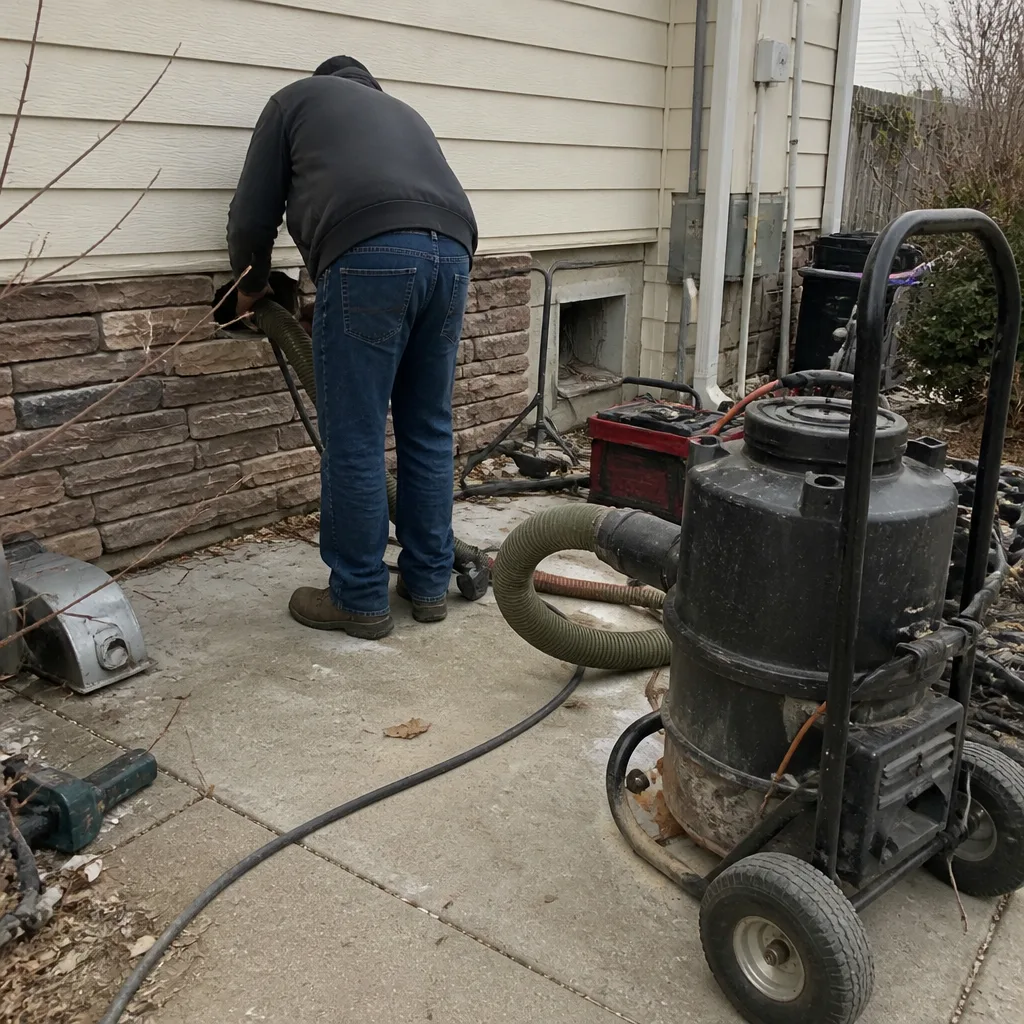 Before
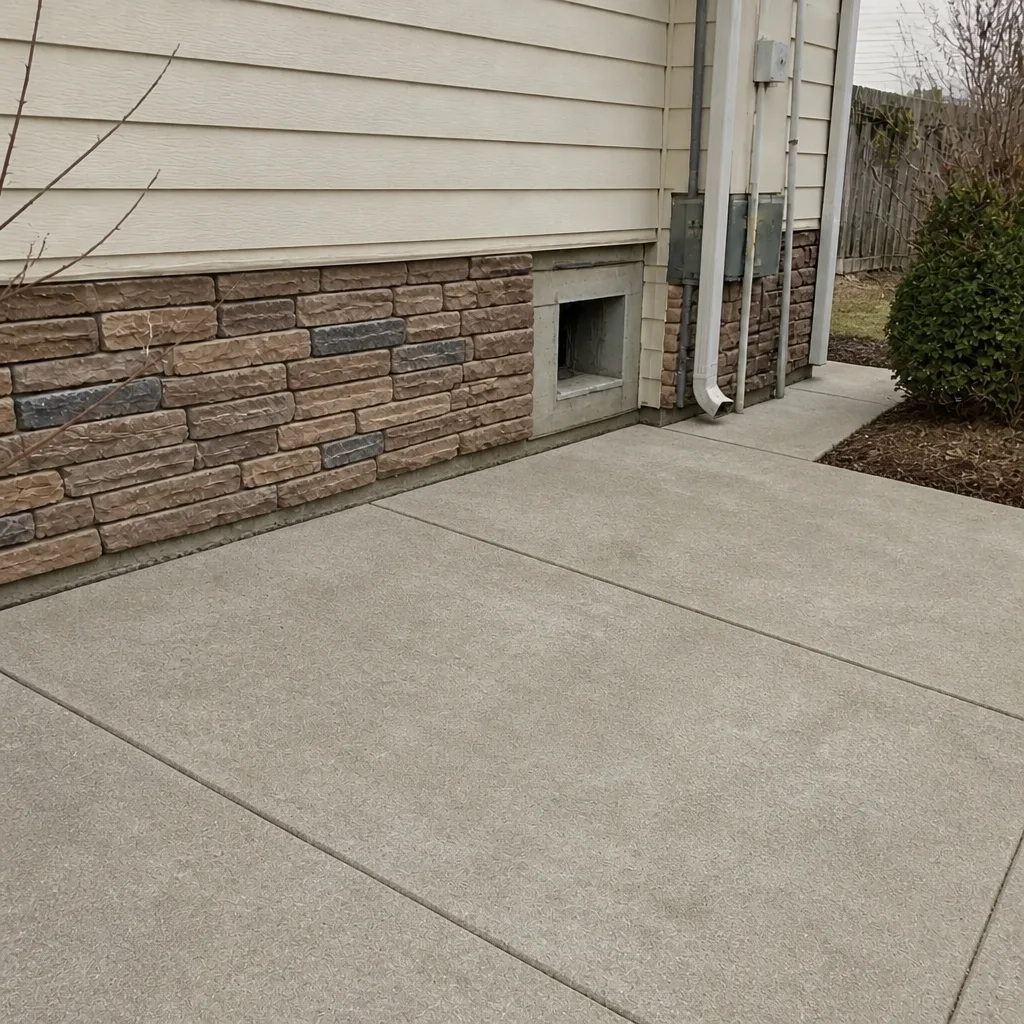 After
When to Call a Professional
Call a professional when a warning sign can’t be explained by anything simpler. Dust returning within days of a cleaning, a musty smell that strengthens with the system, visible damage at a register, or pest evidence all warrant a professional look. So does an airflow imbalance that’s gotten worse over time, especially in an older Thornton home where liner degradation or flex duct sagging is a real possibility. If a warning sign crosses the inspection threshold we’ve outlined here, get the camera in the system first. Duct Cleaning Thornton offers free estimates in Thornton. Call (888) 495-2236. We answer 24/7, with fast dispatch from 7am to 7pm, Sunday through Friday. One flat price per system is agreed before work starts, so you know what you’re paying for before anything is disturbed.
Frequently Asked Questions
Typical professional air duct cleaning in Thornton runs on a per-system basis, not per vent, and the written estimate sets the final price. Whole-system cleaning with professional equipment generally falls into a mid-range band that reflect the equipment, containment, and labor involved. Quotes that come in far below that band are usually priced on per-vent counts and can grow once work starts. Call (888) 495-2236 for an exact quote. Estimates are free.
Cheap quotes are usually built on a low headline price that’s adjusted upward on-site, per-vent counting, or consumer-grade equipment that can’t move the debris. When a crew arrives with a shop-vac rather than a Rotobrush or Nikro system, the cleaning is only as good as the vacuum. Ask what equipment is used, whether the price is per system or per vent, and whether you’ll get before-and-after photos. Then decide. Call (888) 495-2236 to compare what a professional estimate looks like.
You should see before-and-after photos of your own ducts and registers. That’s the simplest proof, and it should be standard. A crew that can’t show you what came out of your system is asking you to take their word for it. Ask up front. Call (888) 495-2236 if you want to see what a photo-documented cleaning looks like.
There’s no universal schedule. Homes with pets, recent renovations, allergy sufferers in the household, or a history of moisture problems benefit from cleaning more often than a quiet, well-filtered home. For most Thornton homes, a check every few years makes sense, with cleaning triggered by warning signs rather than a fixed calendar. A camera inspection is the way to settle it. Call (888) 495-2236 for a free estimate and an honest recommendation.
Often, yes. Duct repair is a named part of what we do, and when a technician finds a torn flex run, a disconnected joint, or flaking liner during the cleaning, it can be addressed without a second appointment. The exact scope depends on what’s found, and the written estimate covers it before work begins. Call (888) 495-2236 to book a visit and have it looked at.
Homes from that era often have flex duct that’s sagged over decades, joints that were sealed with tape that’s since failed, and duct liner showing its age. Before you schedule, check whether any duct runs are wrapped in a hard or paper-backed material, and don’t disturb it if you’re unsure what it is. A camera inspection establishes a baseline before anything is cleaned. Call (888) 495-2236 for a free estimate. We answer 24/7, with fast dispatch from 7am to 7pm, Sunday through Friday.
The Bottom Line
Warning signs are only useful if they point at the right problem. Dust returning right after a cleaning is a leak, not a cleaning failure. A weak room at the end of a duct run is usually a restriction or a collapsed section. Musty smells mean moisture, and chemical smells mean the source is outside the system. In Thornton’s older housing stock, liner degradation, flex duct sagging, and joints sealed with failed tape are the most common culprits. Use the inspection thresholds in this guide to decide whether you’re booking a cleaning or a camera inspection first. When you’re ready for a professional look, we’re here. For a free estimate, call Duct Cleaning Thornton at (888) 495-2236. We answer 24/7, with fast dispatch from 7am to 7pm, Sunday through Friday. Our technicians have up to 12 years of experience, and every job is quoted at one flat price per system before work starts, with before-and-after photos of your own ducts.
Written by the team at Duct Cleaning Thornton.